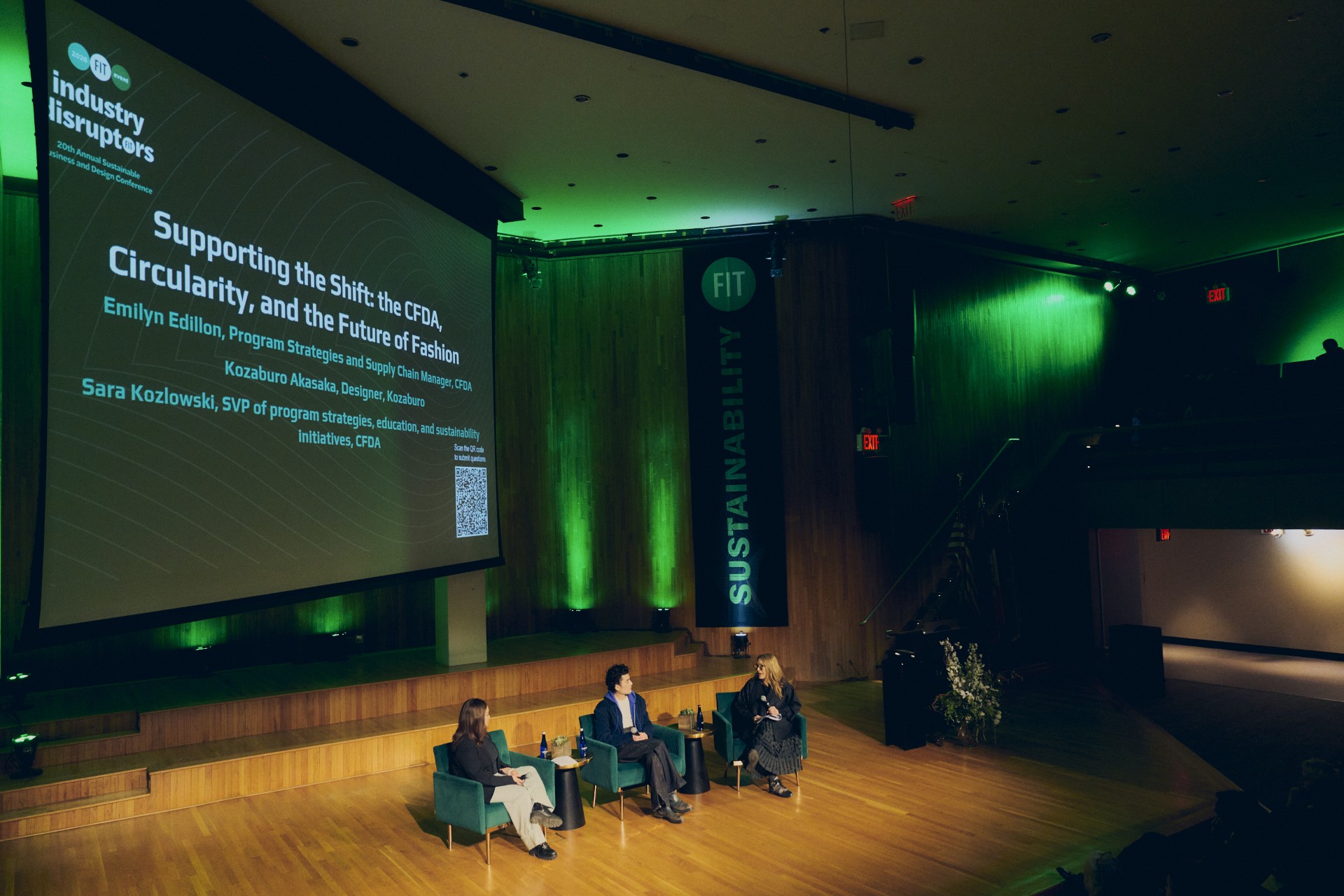
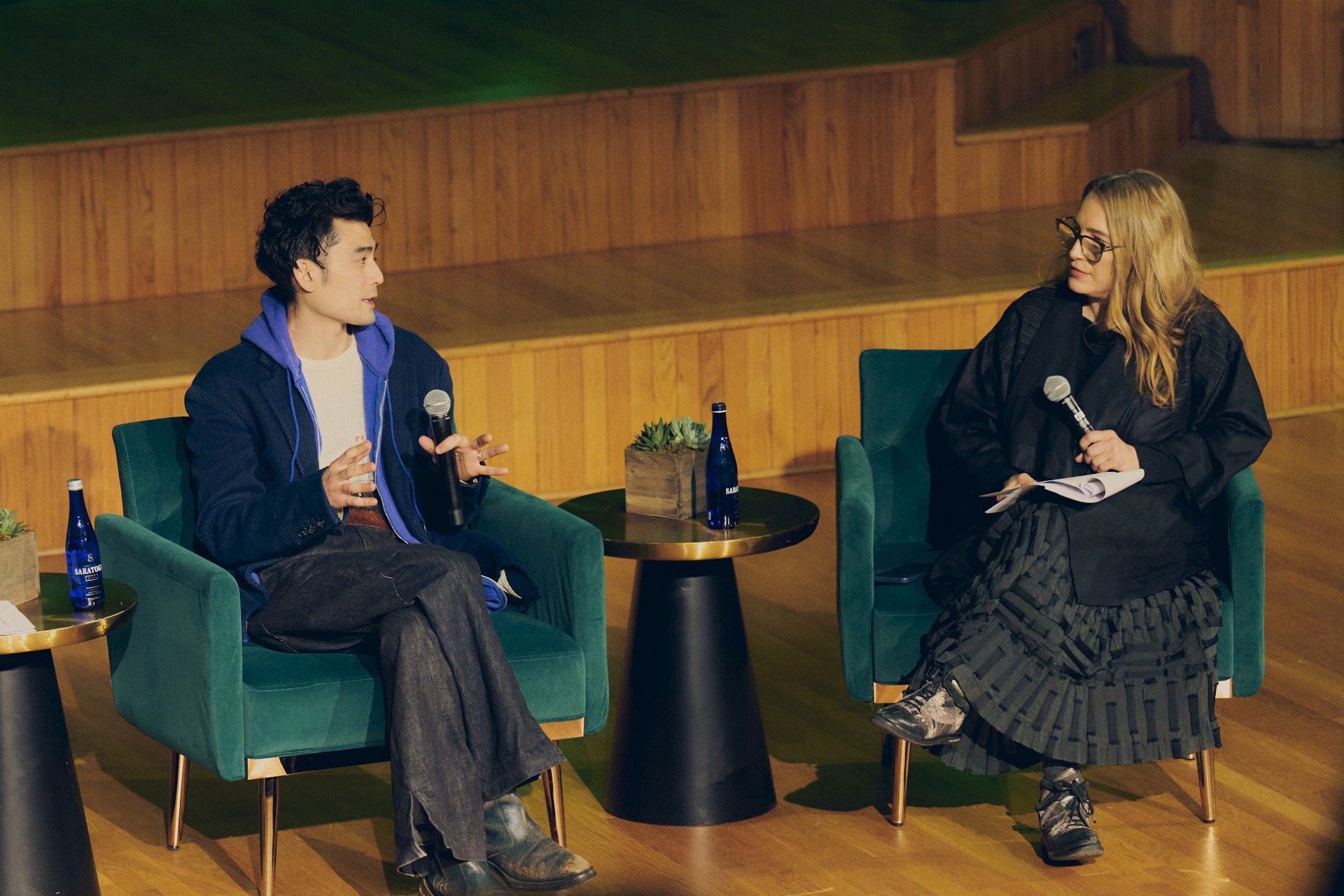
The FIT Sustainability Summit, which took place earlier this month, featured a fireside conversation between Kozaburo Akasaka and myself. Sara Kozlowski, CFDA SVP of Sustainability & Program Strategies, moderated the conversation.
The chat focused on topics that don’t always make it into mainstream media: the friction between craft and production speed, the state of NYC’s manufacturing ecosystem, and why sustainability’s most underrated variables are trust — and time.
A CFDA/Vogue Fashion Fund finalist in 2023, LVMH Special Prize recipient, and former designer for Thom Browne, Akasaka’s Kozaburo label doesn’t announce itself. It earns your attention slowly and then stays with you.
This is a perspective the industry could benefit from hearing — not because it’s a blueprint, but because it’s proof that another way of working sustainably is possible.
Here, some highlights from the chat.
What Kozaburo Inherited Without Knowing It
Kozaburo grew up in Tokyo, but his mother came from a village in Niigata where winters were long and nothing was wasted — not by philosophy, but by necessity. He would travel back with her growing up, watching a way of life completely different from the city. He remembers a bag she had, woven from plant vines gathered in autumn, dried through the season, and assembled in winter. It was the kind of object that took time to exist. That sensibility followed her to the city and into how she raised him — a deep respect for materials, for process, for not throwing things away easily.
“You work with what exists,” Akasaka said. “You find value in what’s already there. The constraint is the creative condition, not the obstacle.”
He didn’t fully understand how much that shaped him until he was years into his design practice. His work — including the PRM line, which reconstructs secondhand garments using a pneumatic stapler as the primary construction method — wasn’t born from a sustainability framework. It grew from a way of seeing he’d inherited without knowing it.
How Kozaburo Turned Repair Into a Design Philosophy
The staple, visible in every piece, is a nod to something older. Kozaburo became obsessed with the story of Bakkohan — a broken celadon tea bowl belonging to a powerful Japanese warlord, so precious it could buy land. When it shattered and couldn’t be replaced, it was returned to him repaired with metal staples. The warlord didn’t see damage. He saw beauty in the evidence of repair. That moment is considered the origin of kintsugi. For Kozaburo, the staple isn’t a workaround. It’s the point.
What Emilyn Is Seeing on the Ground in NYC
That question — whether this philosophy of slow and longevity is actually showing up in the ecosystem — is one I think about a lot.
From where I sit — working directly with designers and factories through CFDA’s programs — the sensibility is growing, but there’s still a ways to go. There’s a growing group of consumers looking for pieces with more longevity and willing to invest, which is pushing designers to be more intentional. At the same time, the market is still very driven by speed and volume — especially on the wholesale side with sell through agreement pressure — so designers are really balancing both. That’s where DTC sales can be helpful, since it gives them more flexibility and control.
In New York, most production is not vertical — generally, you need to purchase fabrics (most designers are purchasing overseas) and trims, ship them to the factory, and work with separate vendors for example for pattern making, grading, cutting, and sewing, all spread across different makers and locations. This is different from overseas, where many factories in Asia or Europe have everything under one roof. For smaller brands, knowing who to go to, where to find them, and who to trust takes time to figure out — and that’s where CFDA can help with access. Our Production Directory is a start, but there’s an opportunity to expand that further.
Cash flow is still a challenge for many factories — when retailers are slow to pay brands, it trickles down to factories, and costs like rent have gone up. On the positive side, the factories doing well have a common thread: they’re innovating in how they work with designers. They know when to say no and when to say yes to challenging orders — for example, accommodating 600 units when they can normally handle 300 through early planning and strong relationships, or being transparent about the extra help needed to achieve a more intricate hand sewn garment. There’s support though for those interested in bringing domestic production back to NYC. CFDA’s Local Production Fund program is designed to do exactly that — offering grant funding tied directly to production, and connecting brands to the factories we’ve already invested in through the Fashion Manufacturing Initiative, which put over $6 million into NYC factories between 2013 and 2019.
How Kozaburo Builds Factory Relationships in Japan — and Why It Matters Here
Backstage, I asked Kozaburo about his production in Japan. He shared that those relationships were built over time — season by season — through consistency and enough trust to have direct conversations about the harder things.
“In craft, nuance is everything, and being able to communicate clearly about construction and materials makes a real difference. Japanese factories are also serious about deadlines, which is critical for a small brand,” Akasaka said.
He was also honest about the challenges: the work is careful and methodical — which can mean slower turnaround — and the workforce is shrinking. The population is aging, and fewer younger people are entering manufacturing. It stood out because the New York Garment District has been facing the same concerns for years.
Closing Thoughts
At the end of the conversation, Sara asked us each what we hoped people in the room would carry with them.
“Enjoy the process. Stay curious. Keep trying,” he said.
None of what he described came from a plan — it came from following what interested him and not being afraid when it didn’t work.
For me, it came back to something simple. Sustainability, in addition to materials, is also about relationships — with factories, with makers, with the people on the other side of the supply chain who rarely get named in the conversation. That includes transparency in communication, and building long-term relationships that drive efficiency, consistency, and stability. It’s about being less reactive and more proactive.