Donna Karan Sent Me to Therapy
April 29, 2026
Britta Larsen
On the eve of Mental Health Awareness Month, I reflect on my own mental health and the power of an HR decision in the fashion industry 25 years ago that set off a ripple effect, shaping my healing and my career ever since.
The Day Everything Changed
What began as a national tragedy would become the catalyst for my understanding of my mind, my work, and myself. It would shape how I would eventually see, lead, and support people at work.
On the morning of Tuesday, September 11, 2001, I was a 25-year-old Senior Manager in the Creative Department at Donna Karan. I was about to get on the subway downtown to the Fashion District when, at 8:46 a.m., the first plane hit the World Trade Center. Like the rest of the world, I was stunned.
In the minutes, hours and days that followed, my anxiety intensified. Rumination, intrusive thoughts, a compulsive need to count, and a constant fear that I would die grew louder and harder to manage. I didn’t have words for any of it. I hadn’t been to therapy. Mental health wasn’t openly discussed. Resources weren’t as accessible and people didn’t identify with or understand diagnoses like we do today.
Then the Donna Karan HR Department offered all employees five free therapy sessions to help process the tragedy.
Did I need therapy? I didn’t know. All I knew was that my mind felt like it was on fire, my body was gripped with tension, and I couldn’t escape it. Even though I was newly married, had plenty of friends and a big family, and lived in one of the most populous cities in the world, I felt alone. My unbearable internal experience existed without language, without context, and without a path forward.
Britta, 25, with sisters Nissa, Siri, Anika and Kari, 2001
So I called to schedule my first session.
I remember the intake. My therapist gently tried to normalize what so many of us were feeling: a heightened awareness of mortality, a collective fear that life could change drastically in an instant.
But as I began to talk, something became clear: this wasn’t new for me.
A Revelation
I had always felt this way.
I couldn’t remember a day since childhood when I wasn’t worrying about dying or silently questioning whether I deserved to live. I wasn’t suicidal, I didn’t want to die, but I carried a persistent sense that something bad would happen and that I wasn’t worthy of being here.
To manage those feelings, I counted. Everything.
I counted how many pieces of furniture were touching the ground in any room I entered. I counted windows, cars, trees and people. I created patterns and pairs as I moved through the world. Numbers that were even brought calm. Odd numbers left me unsettled, compelled to re-count, adjust, make them “right.”
I also checked things repeatedly—doors, stoves, facial expressions—seeking certainty and reassurance that never lasted. My mind got stuck on “what if” thoughts and wouldn’t let go.
What if an intruder gets in because I didn’t check the lock one more time? What if I said the wrong thing? What if they’re upset? What if I missed something? What if it’s my fault?
So I tried to fix everything: my environment, my actions, my thoughts.
What I didn’t know then was that these weren’t just my quirks. They were classic patterns of obsessive-compulsive disorder: intrusive thoughts (obsessions) paired with behaviors meant to reduce anxiety (compulsions).
I had unknowingly channeled this mental intensity into overworking, over-organizing, and overdoing. It made me exceptionally good at my job. I had been promoted twice in the past year alone and was managing over 2,000 advertising projects annually. I was dependable, efficient, and precise.
But inside, my thoughts were relentless, merciless.
In those first therapy sessions, I had a shocking realization: not everyone’s mind works like this.
I used all five sessions in a month. Then I couldn’t afford more for a couple of years. But as soon as I could, I went back, and continued to see that same therapist for the next decade.
How We Become Who We Are
In therapy, I began to understand anxiety and OCD, but more importantly, I began to understand how my life led me here.
I started asking a question that would shape everything that followed:
How do we become who we are?
What forces—family, school, friendships, love, work, identity, addiction, loss—shape our sense of self?
I began to see my childhood not just as memories, but as the foundation of how I coped, connected, and navigated the world.
I grew up as the seventh of 10 children in a multicultural family, six kids arriving by adoption, four by birth. Our home was both connection and chaos. It was laughter, creativity, and belonging alongside competition, confusion, and a constant yearning to be seen.
In a family that large and diverse, I learned early how to read the room. I tracked moods, anticipated needs, and adapted quickly. I also learned what it felt like to be invisible, mistaken for another sibling, overlooked, unsure of what made me uniquely me.

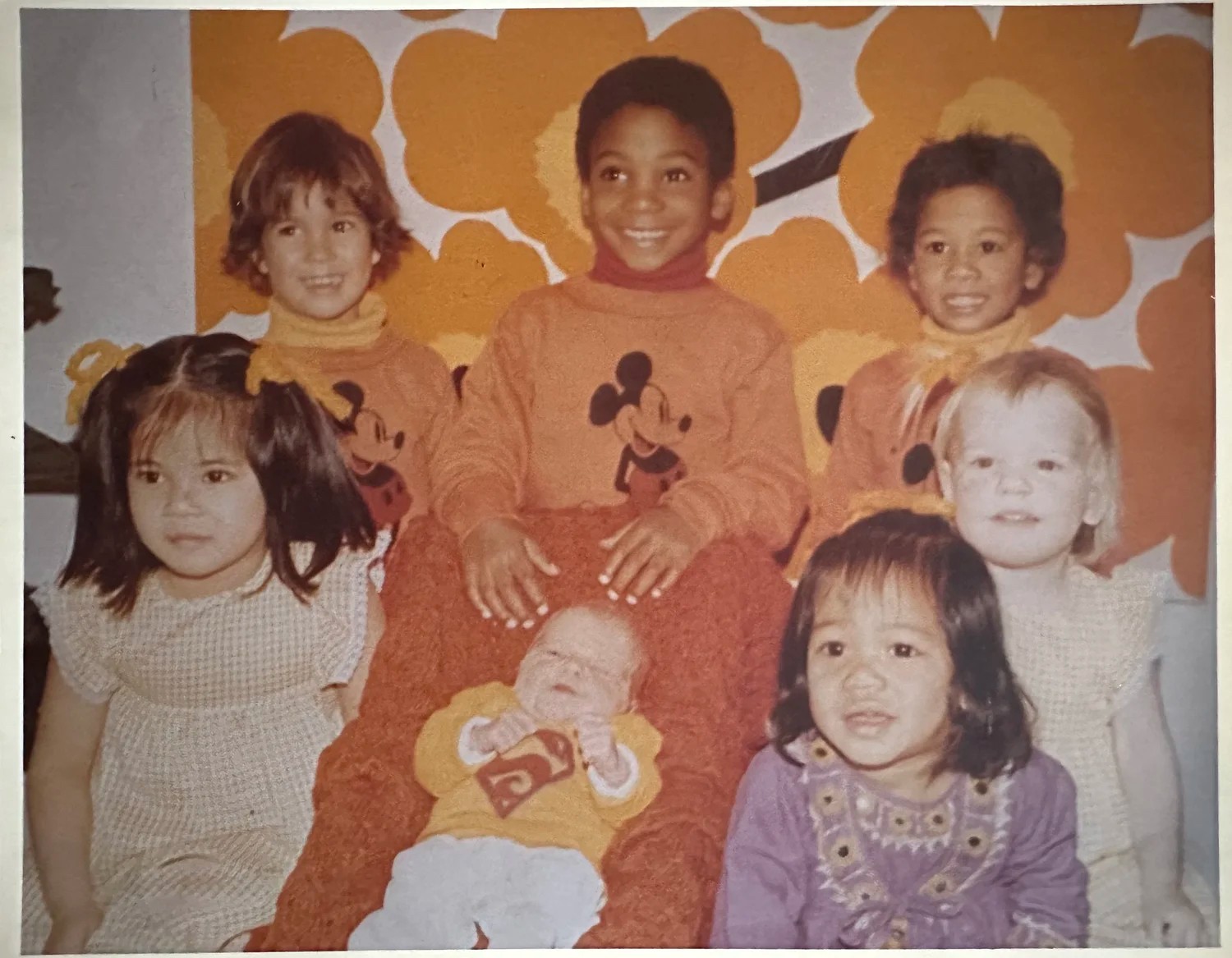
Britta with her six siblings, 1976
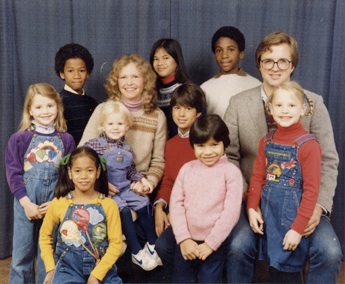
The Larsen family with Britta at the far left, 1982
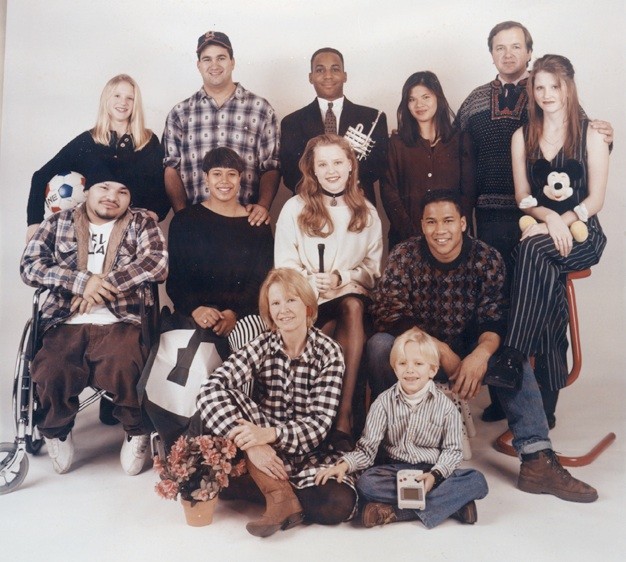
The last picture of the Larsen family together with Britta at the far right, 1994
In therapy, I processed years of school bullying and my longstanding belief that I wasn’t intelligent because of dyslexia. I explored an abusive teenage relationship rooted in an unconscious sense of unworthiness. I spoke about the complexity of sibling dynamics and fear in my own home.
I began to realize that my childhood love of fashion was not only an effort to express myself and a desire for a future career, but a way of coping.
Fashion was something that felt like mine. It gave me a way to stand out, to look fabulously put together on the outside while I grappled with the constant unease that the seams were coming apart on the inside.
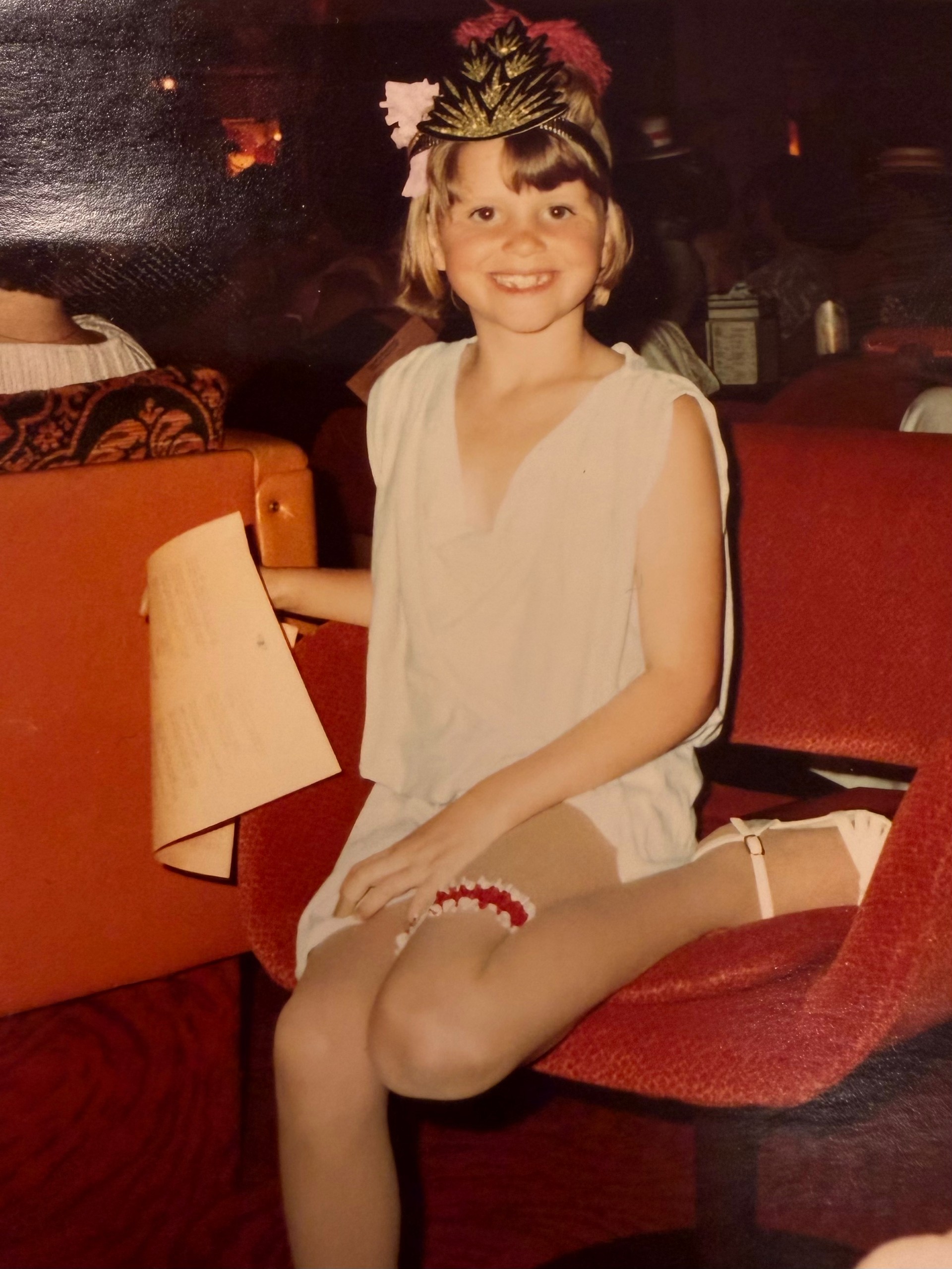
Britta Larsen in 5th grade when fashion started to be an expression, 1985
What I didn’t yet understand was that the hacks I had cobbled together to get through my childhood would follow me into adulthood and into the workplace. The ways I learned to cope became the patterns I relied on—and eventually had to unlearn.
When Coping Becomes Performance
Over the years, I used therapy to explore why I overworked, why I became a people-pleaser with difficult coworkers and bosses, how stress at work impacted my body and my fertility, and how to manage the difficult balance of being a working mother. I worked through the inequality in my marriage, the decision to leave it, and divorce. I processed grief from the loss of jobs, homes, friendships, the sudden death of my brother and the overdose of my sister.
I recognized patterns, realized I had developed rituals, and learned they were adaptations. I began to understand these adaptations through the lens of the nervous system, how what we call coping is often a stress response.
Fight can look like control and criticism.
Flight can look like overworking and urgency.
Freeze can look like shutting down and avoidance.
Fawn can look like people-pleasing and self-abandonment.
I also began to see how seamlessly I had turned my adaptations into over-functioning. Work became my most socially acceptable compulsion.
And in many workplaces, that behavior isn’t questioned—it’s rewarded. We call it drive. We call it high performance. We call it leadership. What looks like discipline on the outside can be dysregulation on the inside. What looks like success is often a nervous system trying desperately to feel safe.
For me, these weren’t personality traits. They were survival strategies—ones that helped me succeed, but at a cost. I rarely felt at peace.
Once I saw this, I couldn’t unsee it—especially at work. I saw it everywhere: in overachieving employees, in leaders, in the people everyone relied on most.
And it irrevocably altered how I understand the workplace, leadership, and what people really need to feel supported and thrive.
A Full Circle Moment
I recently turned 50, and because I will never fully lose the itch to understand my world in numbers, I’ve been comparing the first 25 years of my life without therapy to the last 25 years of my life that have been transformed by it.
My career shifted in 2006 from project management to human resources, where I was determined to offer employees the same kind of support that Donna Karan’s HR team once gave me.
In 2020, the isolation of the Covid shutdown and the pain of the Black Lives Matter movement brought the impact of mental health into work even more intensely. After a decade of hearing people say, “That felt like HR therapy,” as they left meetings with me, I realized I wanted to make that true.
So I went back to school.
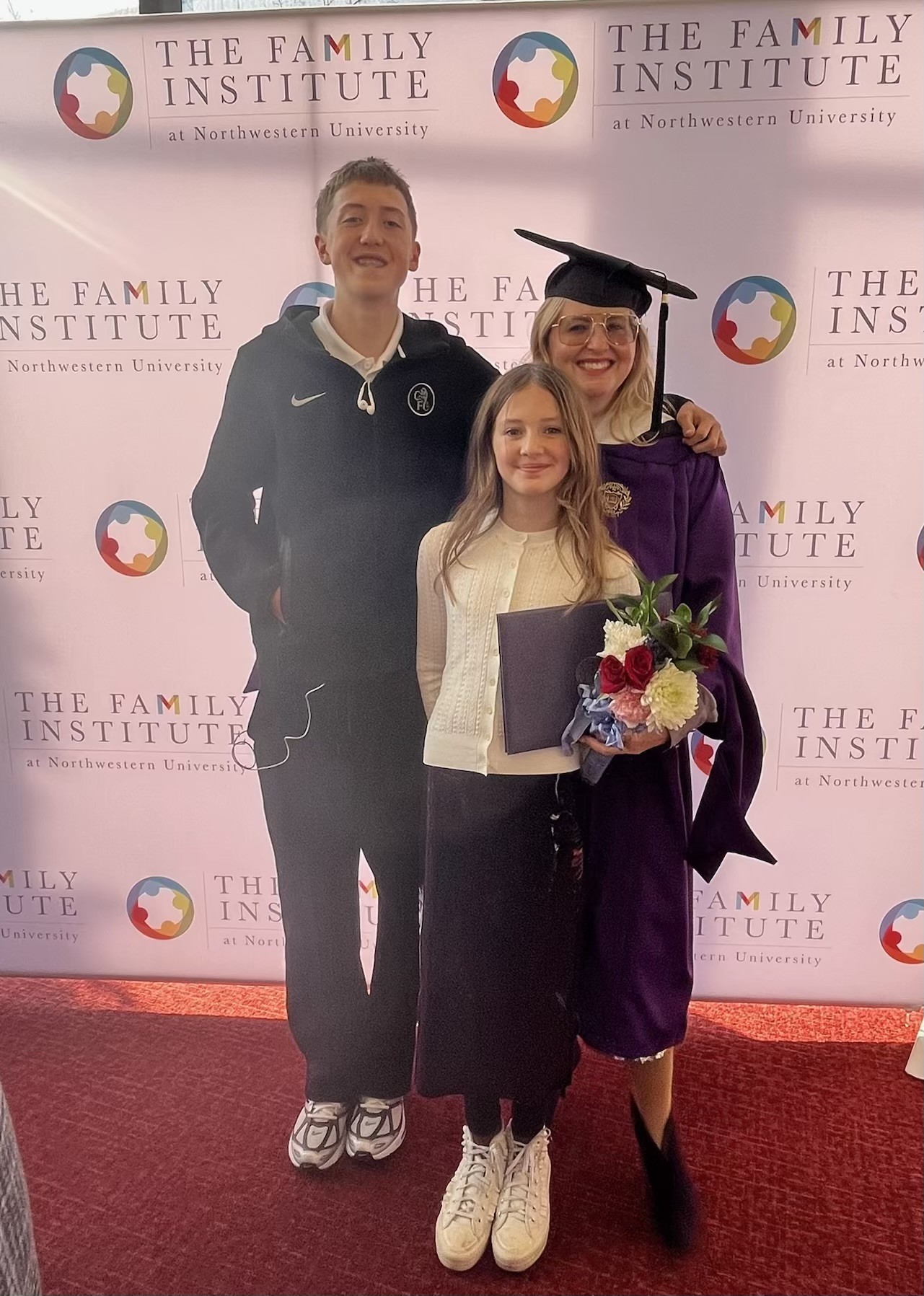
Last year, I earned my master’s degree in Mental Health Counseling from Northwestern University, with a focus on multiculturalism and social justice.
Today, I work at the intersection of HR and mental health through my practice, It’s HR Therapy. I believe that when work works better, life works better. And that healing leaders heals cultures.
Last week, I had a full circle moment, one that allowed me to “connect the dots,” as Donna Karan often says.
I attended a CFDA member event at Donna’s studio and had the opportunity to thank her personally for the five therapy sessions that changed my life, and for the progressive HR culture that inspired me to heal, to understand, and ultimately, to find a new way of showing up for myself and for my colleagues at work.
Making Mental Health Awareness Fashionable
Fashion has always been about expression. Identity. Pushing boundaries.
But behind the creativity, deadlines, shows and pressure are people. People navigating anxiety, grief, trauma, ambition, addiction, burnout and belonging—often all at once.
Today, we have more tools, more language and more opportunity.
To normalize mental health awareness at work.
To understand that performance can often be dictated by stress responses and attempts at self-regulation.
To build cultures where performance is rooted in wellbeing.
Because the question is no longer whether mental health awareness belongs in the workplace.
It’s whether we are willing to lead with that understanding—and how much becomes possible when we do.
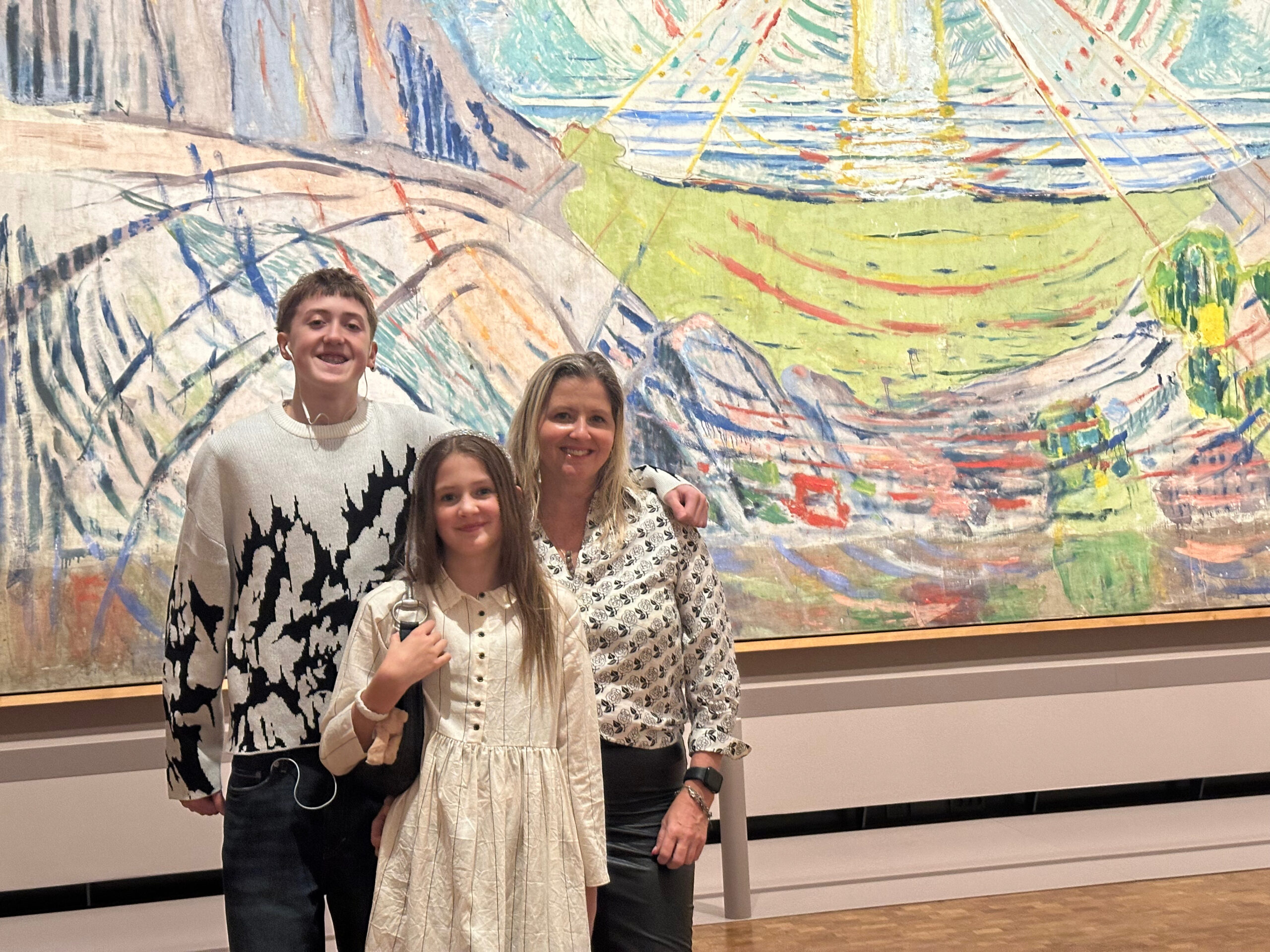
Britta with her children on her 50th birthday at the Munch museum in Oslo, Norway, 2026
Britta Larsen is a psychotherapist and HR consultant who supports founders, executives, people leaders, HR teams, and organizations navigating growth, transition, and identity. She currently serves as HR consultant to the CFDA.
Her integrative, trauma-informed approach blends human development, person-centered and somatic practices to support relational health, nervous system and emotion regulation, and sustainable leadership. With warmth and curiosity, Britta partners with individuals, teams, and organizations to untangle old patterns, build self-awareness, and foster healthier workplace dynamics and cultures.
Britta is the author of the forthcoming book, You’re Doing It: Stages of Becoming, which weaves personal narrative with therapeutic insight to explore how we grow, heal, and lead across our lifespans.
itshrtherapy.com