So, what compelled you to turn toward fashion?
After a few years in Washington, I had to confront what, precisely, I intended to do with my life. I enrolled in the one-year fashion buying and merchandising program at the Fashion Institute of Technology in New York.
I quickly realized how little I understood about fashion. The classes were small; there was nowhere to disappear. You had to arrive prepared or risk being thoroughly embarrassed.
I remember taking retail math, and I am notoriously terrible at math. My professor was Bette Tepper, who had written our textbook, Mathematics for Retail Buying. On the first day, she gave us a pop quiz, and I got an F. I remember thinking, “I’m going to master this class.”
I had never labored so intensely over a course. By the end of the semester, I had earned an A-minus, which I was terribly proud of.
Anne Klein appears to have been the place where the business became real. How did those early years begin to shape you?
I interned at Anne Klein, left for a job as a sample coordinator at French Connection, and eventually returned as a paid employee in public relations. I started as a PR assistant and, over about eight years, became PR director. I also met my husband, designer Patrick Robinson, there.
Lynn Tesoro, then vice president of public relations at Calvin Klein, called me to interview with her, Robert Triefus, and Gabriella Forte. I had once opened a door for Gabriella, and she remembered me. Somehow, that small encounter stayed with her.
Calvin Klein was an incredible place to work. Calvin was brilliant, and the company was completely in the Zeitgeist. I oversaw fashion coverage, fashion shows, celebrity and VIP dressing back when Foxy Brown, Left Eye, Shakira and Macy Gray were photographed for our Calvin Klein Jeans’ Fall 1999 Campaign and collaborated on events. It was an extraordinary time to be there.
You had resigned from Calvin Klein and were contemplating an entirely different life upstate when Vogue called. How quickly did everything change?
Very quickly. The day my departure was announced in Women’s Wear Daily, I was still at Calvin when I got a call from Tonne Goodman asking, “Can you come see Anna Wintour today?” I said yes, but remember thinking, why?
Wendy Hirschberg had resigned, and Anna wanted to speak with me about the role. I met with Grace and Tonne first and asked, “Do you really think I can do this?” They both said, “Yes, we think you can.”
Everything happened so quickly that I didn’t have time to be nervous. I met with human resources, then went back to work thinking, I had better tell Calvin.
I called his office and explained what had happened. Calvin said, “It would be great for you.” Then, in the middle of our conversation, he said, “Anna’s on the other line. I’ll call you back.”
A few hours later, Vogue offered me the job. I accepted the next morning. That was 24 years ago.
Fashion has increasingly become an industry in which visibility is itself a kind of currency. Yet you’ve helped shape how fashion is seen without making yourself the center of the picture. Was that instinctive?
It’s my personality to some extent. I’m from the South, and it was considered bad manners to draw too much attention to yourself. It’s probably hindered my career not being so out front, but I feel most comfortable in the background.
Grace Coddington is a once-in-a-lifetime editor. She is a true visionary and extraordinarily creative. I am not that.
I work well with creative people and know how to collaborate, but I’m not the kind of creative Grace is. I would never presume to think of myself that way. I’m very good at diplomacy.
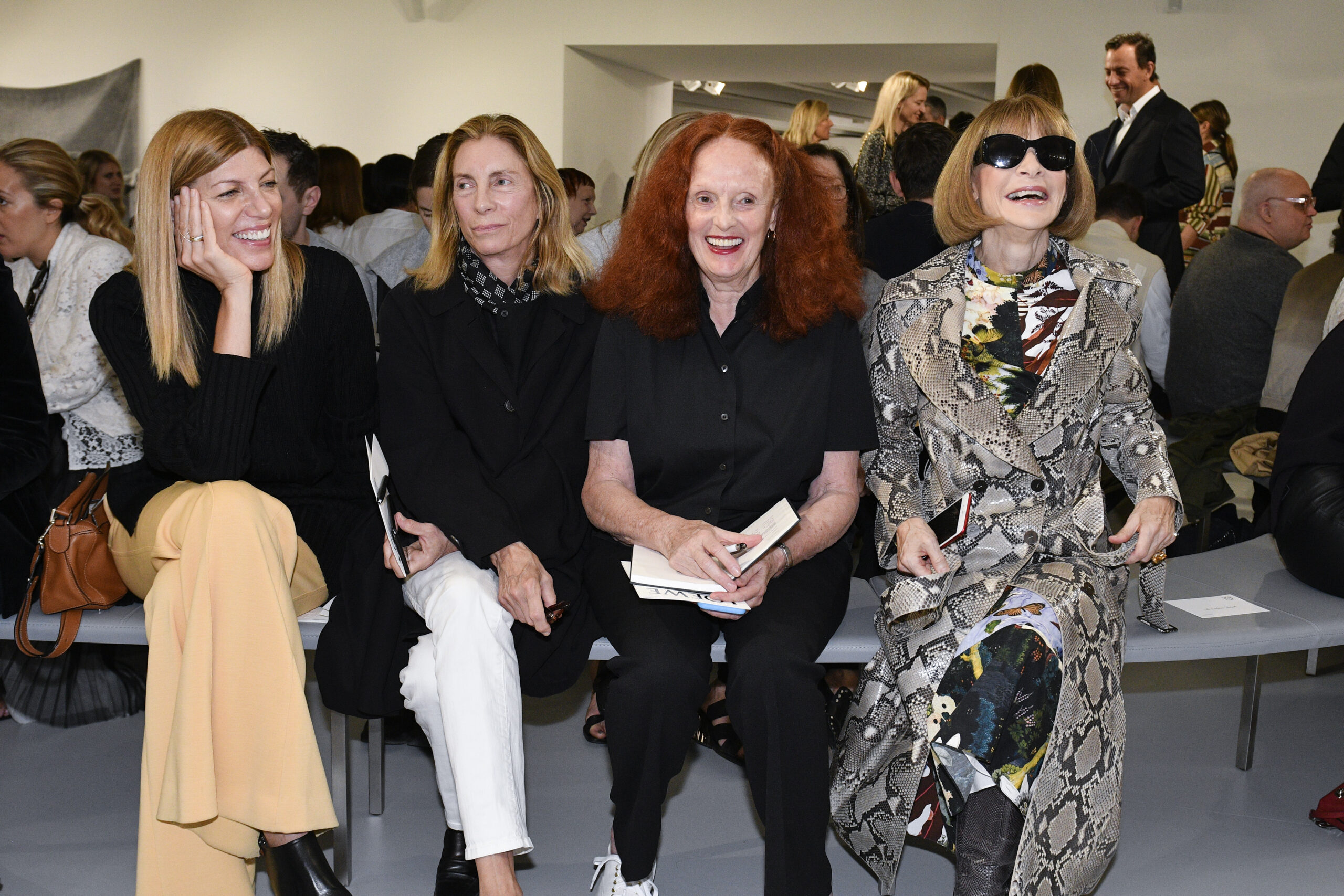
When I arrived at Vogue, there was Anna Wintour, Grace Coddington, Tonne Goodman, Camilla Nickerson, and Phyllis Posnick. I used to refer to them as “the ladies.”
You’ve worked alongside editors with profoundly different creative instincts. What was it like learning to move between those distinct visual languages?
I loved working with Grace on her narrative, fairy-tale stories. Whether it was Alice in Wonderland or Keira Knightley in The Wizard of Oz, these were enormous productions, and it was extraordinary to help create those worlds.
With Tonne, who did most of the covers at the time, it was a different collaboration. We were very much in those projects together.
Camilla’s stories came out of left field, but we knew they would be good. We called them “Camilla-isms.”
Each editor approached a story through her own lens. Phyllis created incredible beauty images and, obviously, the infamous images with Mr. Irving Penn. It has been a privilege to work alongside these iconic women.
Your career spans the primacy of print and today’s innumerable platforms. How has that changed the way you think about where, and in what form, a fashion story should live?
It’s a completely different landscape. There was a time when we had a clear game plan: “We’ll shoot the print story, and then we’re going to shoot a video.” At the time, that was a very big deal.
Now, the question is: What story are we trying to tell, and how is it best illustrated? Is it a podcast? Video? Print? We recently released a cover with Aryna Sabalenka that will appear in an upcoming print issue but unveiled it much earlier digitally.
If it’s a good, relevant story, the vessel matters far less. It’s about what we’re saying and how we choose to tell it.
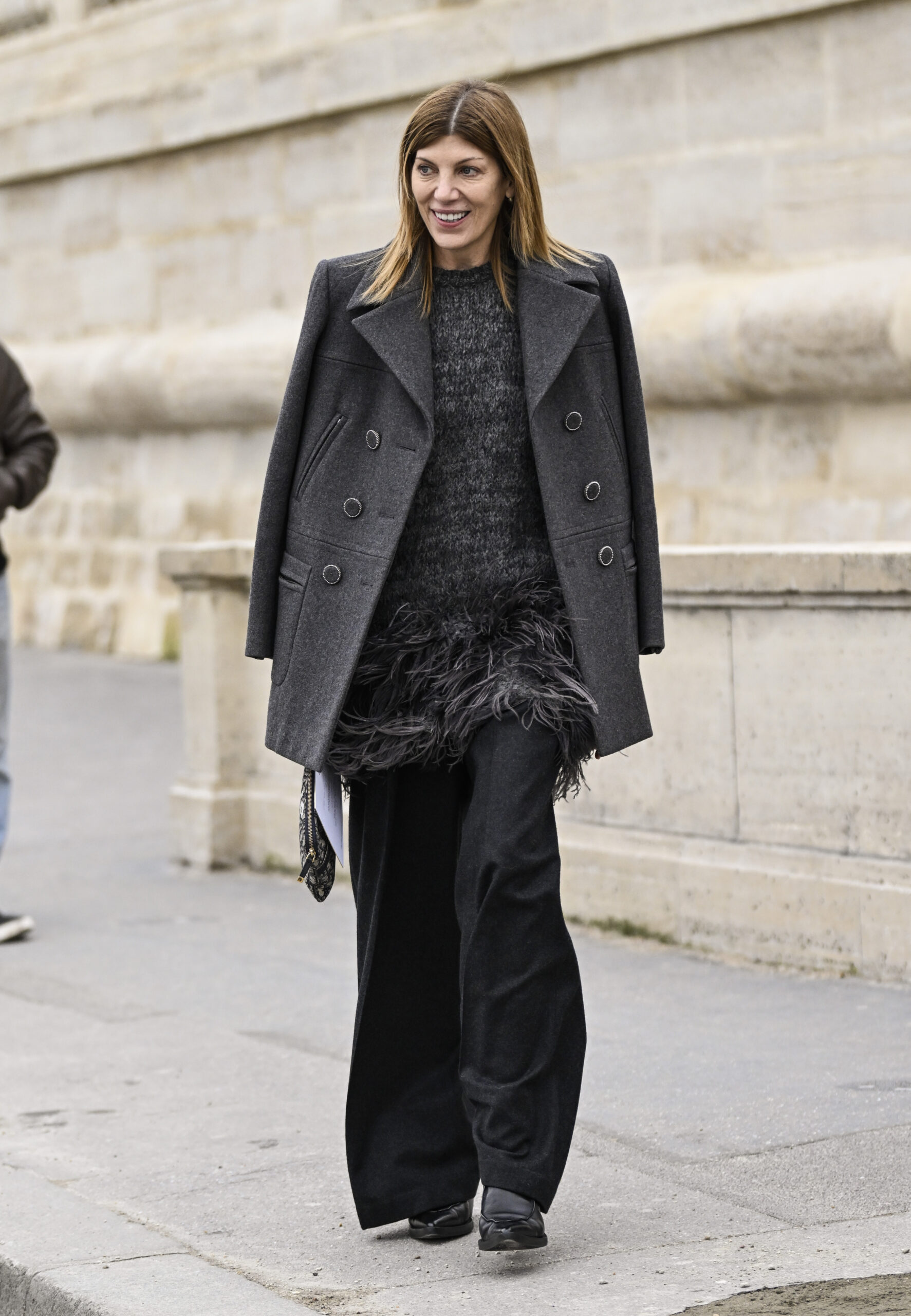
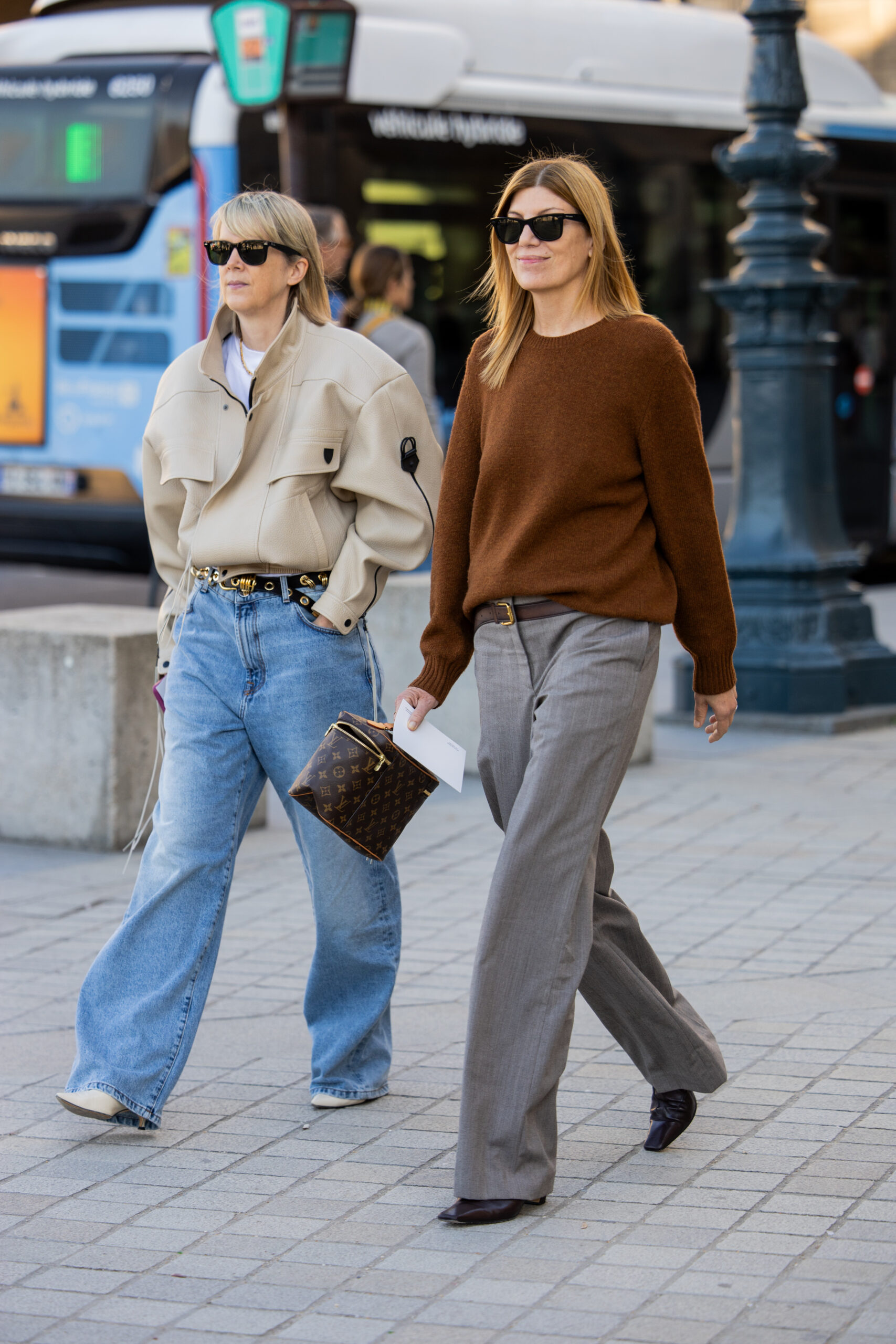
The oversized knits, elongated proportions, and wide-leg trousers that nearly obscure the shoe: your silhouette has remained remarkably constant. When did that way of dressing begin to feel distinctly your own?
I’ve loved a wide-leg pant since I was little. I was very tall at a young age, and in Texarkana there simply weren’t many stores. I remember discovering elephant-leg jeans in the eighth grade and wearing them nearly every day. They were the one pair of pants long enough for me.
The wide-leg pant simply works for me. When I find a shape that suits me, I buy multiples. At one point, I owned the same Chloé pant in three colors. There’s a Phoebe Philo pant that works particularly well for me, and although it’s expensive, I’d rather buy less.
As you get older, you develop a kind of uniform. I’ve certainly done that.
After decades inside fashion, does the industry still possess the power to genuinely excite you? What can still arrest your attention or move you emotionally?
It depends. You see a great many shows, and they don’t all command your attention. But when something is happening, you can sense it.
I’ll never forget Alessandro Michele’s first womenswear show for Gucci. I had no preconceived notion of what the show would be, and suddenly all of these new ideas about dressing began coming down the runway. I turned to Mark Holgate and said, “Oh my God, what are we seeing here? I’m loving this.”
I felt that again seeing Haider Ackermann’s debut at Tom Ford. I had watched his shows in Paris for years, and to see him enter this new world and find such success has been enormously gratifying.
Working with new stylists excites me, too. Alex Harrington began as an assistant to Camilla Nickerson at Vogue. I remember when he landed his first Vogue cover and how thrilled I was for him. I remember Jorden Bickham receiving her first cover as well.
The same was true with Max Ortega on the Nicki Minaj cover with Norman Jean Roy. We were standing by the rack, waiting for Nicki to arrive, when Norman said, “This is my first Vogue cover.” Max looked at us and said, “Me too.” I got teary-eyed.
Those personal moments are what carry you through all of this. It’s not my love of a great pant. It’s the relationships I’ve formed with these incredible people that have kept me here for as long as I have and afforded me this extraordinary career.
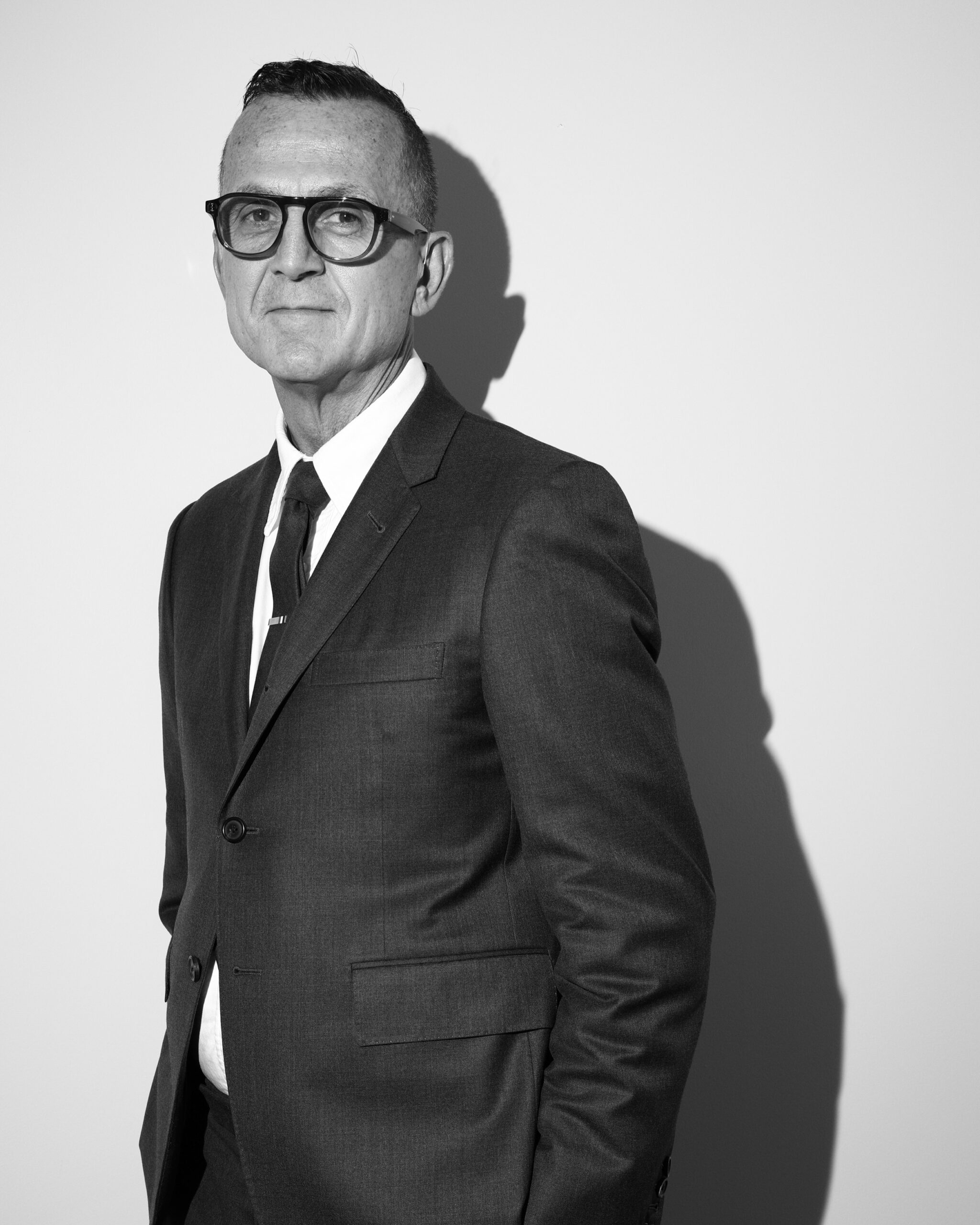
Hero Image: Virginia Smith outside the Dior show in Paris, 2024. (Photo by Daniel Zuchnik/Getty Images)