Todd Snyder Enters Home with CB2
June 4, 2026
Rashad Benton
Long before Todd Snyder became associated with softened tailoring and a distinctly restrained point of view, engineering, business and architecture were already shaping the way he thought about design.
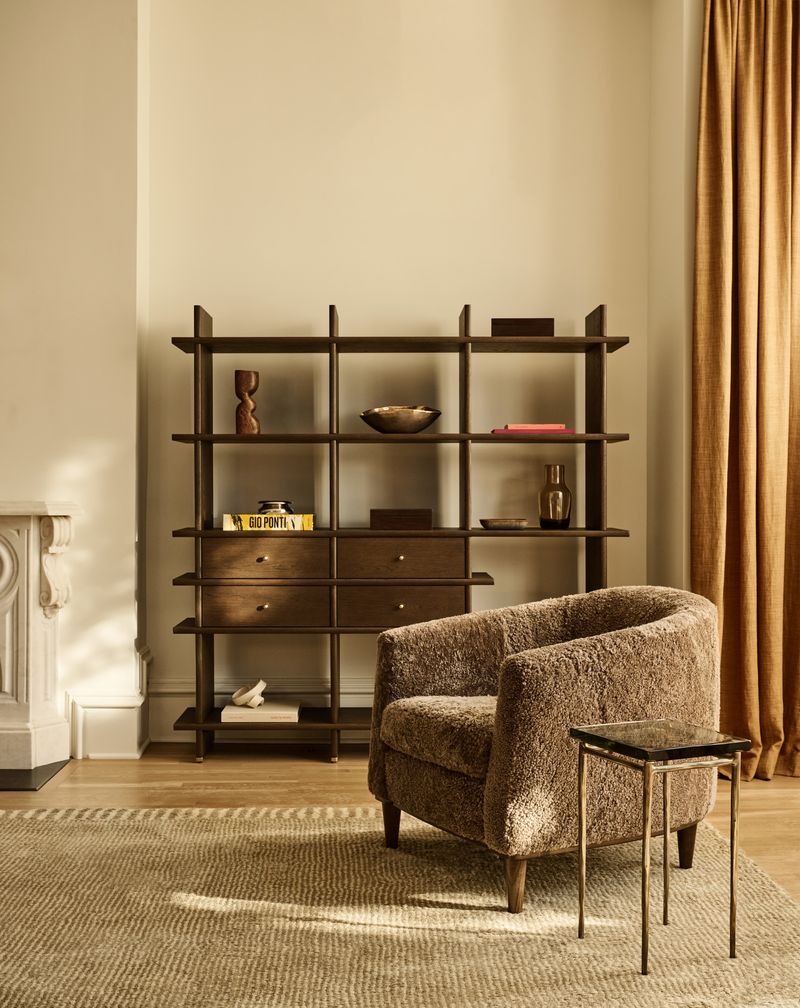
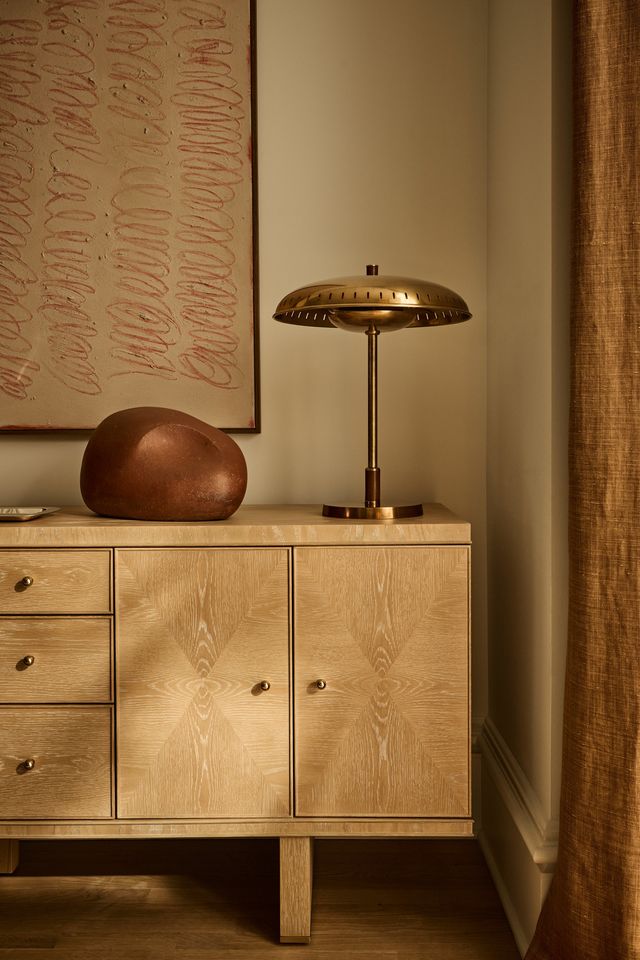
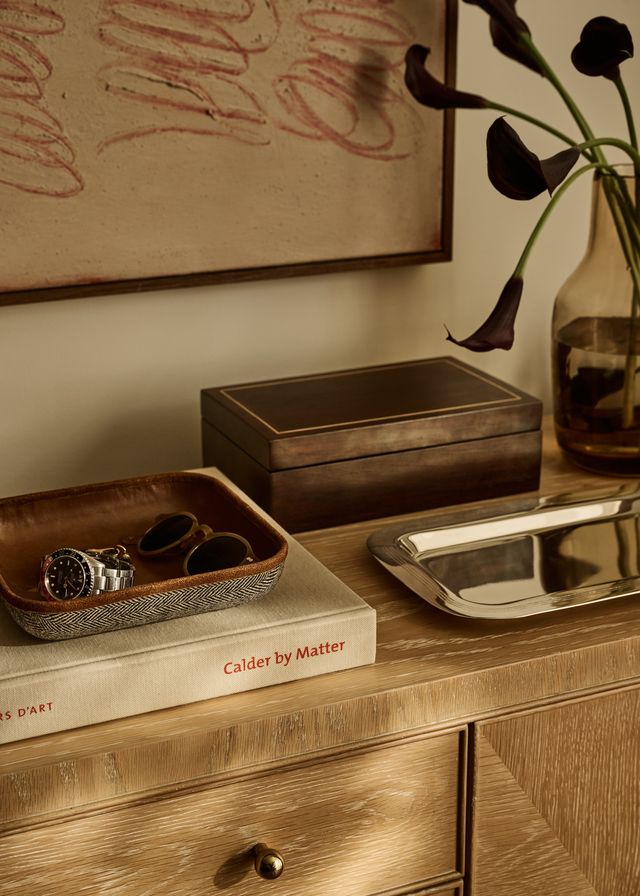
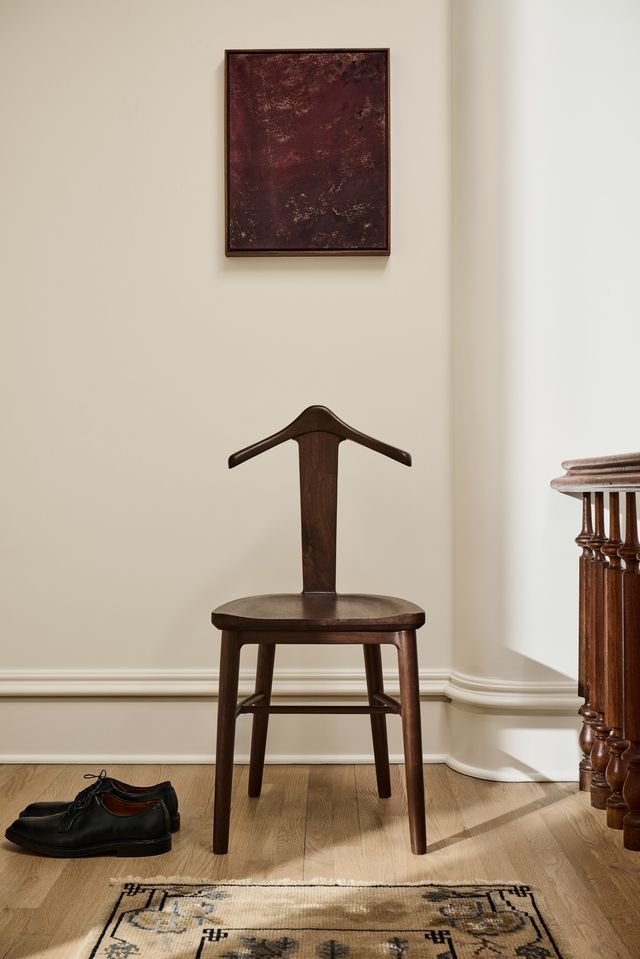
Now, as CB2’s first menswear collaborator, Snyder expands into a world that he has quietly been building for years with a new 65-piece collection. His move into home feels less like a departure and more like a return. Snyder’s mother – a retired interior designer who lent her talent to Meredith Corporation by working on interiors for publications like Better Homes & Gardens – a encouraged his early interest in both fashion and home. Long before this collaboration, he was already blending those worlds in his own stores, personally sourcing furniture through antique shops and flea markets and filling spaces with one-of-a-kind discoveries.
“A T-shirt for $68 to a shearling coat that retails for $5,000 — there’s a high-low balance in our stores,” Snyder says. “There’s a range for everyone, which helps keep us approachable.”
He brought that same thinking to the CB2 collection, creating a range of materials, price points and pieces intended to feel personal, collected and lived with rather than overly designed or precious.
Walking into one of your stores can feel almost disorienting because everything slows down: the lighting, the pacing, even the attention to detail. At a moment when so much of modern life feels fragmented and overstimulating, were you intentionally creating environments that invite people into a different rhythm?
It’s intentional. As I think about apparel and how people experience it, the environment it lives in matters just as much as the product itself. You can describe a brand in words, but words only take you so far. Usually when someone walks into one of our stores, they immediately understand it.
I still remember the stores that affected me early in my career. They were places that made you feel welcomed while also inspiring you. They created a feeling, and those experiences stayed with me. When I started opening stores of my own, I wanted the physical space to become another expression of the brand. I wanted people to feel like they were entering a world instead of simply shopping for clothes.
We’re opening our 24th and 25th location this year, and while I want each space to have its own personality, I also want there to be a common thread running through all of them. Ultimately, the goal is simple: to create something that inspires people not only in how they dress, but in how they want to live.
Your stores reward curiosity in a way that feels rare now. You walk in for one thing and end up paying attention to five others. You start noticing fabrics, objects and details you didn’t expect to stop for. Was that sense of discovery something you were consciously building into the experience?
Fifty percent of what we carry in our stores is product we manufacture specifically for the space, while the other fifty percent comes from pieces I’ve sourced with regards to the furniture and interiors. I’m always looking back at the ’50s, ’70s and ’80s because that’s how I approach design. Continuously thinking about how to reinterpret those ideas for today. I’ve always wanted the stores to feel like dwellings where people can discover something. Most people aren’t walking in and buying an entirely new wardrobe. They’re building an attire and a home over time.
You create a world gradually. You find pieces that stay with you, add things that reflect who you are, and shape your own point of view along the way.
That same thinking carried into the CB2 collection. We wanted it to feel elevated but still approachable. Some pieces are made in the U.S., others, like our dinnerware, were produced in Portugal, and our shearling chair is manufactured here as well. Having different materials, makers and price points allowed us to create something with range while still maintaining a strong point of view.
The move into home through CB2 feels less like expansion and more like evolution. Looking back now, does working in interiors make you realize the brand had already started moving beyond fashion years ago?
For sure. It really started when we opened the first Todd Snyder store in New York about 10 years ago. I was working with 1stDibs and sourcing much of the furniture through dealers and different collectors. 1stDibs was one of the first places where we launched a marketplace and started selling some of those pieces directly on our site. It became clear quickly that there was real interest in it. We had customers coming in and asking if they could buy the table or the rug. Eventually we reached a point where I couldn’t keep replacing one-of-a-kind pieces every time someone wanted to take one home.
That was really the beginning of me thinking more seriously about interiors. I wanted to explore it further, but it wasn’t until the team at CB2 came into the picture that it felt possible at a larger scale. They understand sourcing in a completely different way and have relationships all over the world. That gave us the opportunity to take ideas that had lived inside the stores and build them into something bigger.
There are a lot of furniture brands this collaboration could have existed inside of, but CB2 feels culturally specific in a way that makes the partnership interesting. It sits somewhere between design aspiration and everyday accessibility which, in some ways, feels similar to what you’ve built in menswear. Was that overlap part of the attraction for you?
Absolutely. I had been paying attention to some of the work happening across the Crate & Barrel family. I remember seeing CB2’s work with Gwyneth Paltrow and Goop, and later what they had done with Lenny Kravitz. I was also paying attention to projects across the broader Crate & Barrel family, including collaborations with Athena Calderone and Daniel Humm. Building a culture around collaboration like that isn’t easy. After meeting Ryan Turf and spending more time with the team, I realized we were drawn to a lot of the same things. They visited our townhouse in Chicago and somewhere along the way a lightbulb went off. It became clear that we should do something together.
I wanted the collaboration with CB2 to feel eclectic. I wasn’t interested in creating something where everything matched perfectly. I wanted the collection to feel layered and collected, almost as if it had come together over years.
Looking through the collection, I kept thinking less about furniture and more about private rituals. Somewhere to place keys, pour a drink after work, read late at night, or spend time in solitude. It made me wonder whether you were designing around emotional behavior as much as aesthetics.
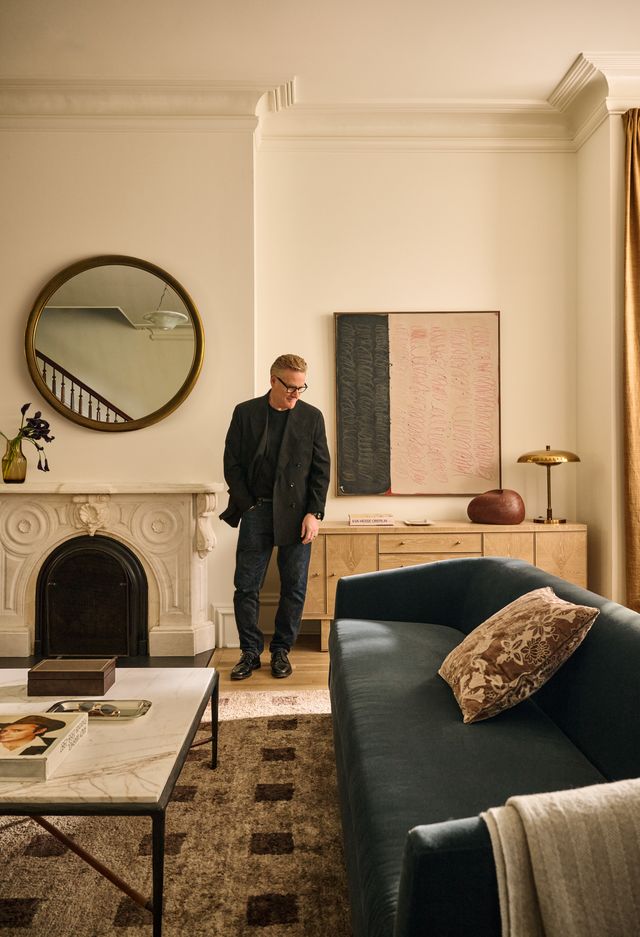
It was more about the environment. I approached it the same way I think about a guest walking into one of our Todd Snyder stores. I’ve always wanted those spaces to feel like home in some way.
This felt like an extension of that thinking. I wasn’t just designing individual objects. I was thinking about how people actually live with these pieces and the role they play in everyday life. Furniture is much more permanent. It becomes part of the way people move through a space and experience it over time.
When someone brings these pieces into their home, what do you hope they’re really inviting into their life beyond design? Because the collection feels rooted as much in mood, ritual and emotional atmosphere as it does aesthetics.
The whole idea of the townhouse was this urban dwelling that people live in. Midcentury furniture and interior design have constantly been a strong source of inspiration for me. I’m a huge admirer of modernism, especially in architecture. Ludwig Mies van der Rohe is one of my favorite architects, but also Frank Lloyd Wright.
What I wanted to create was a feeling of comfort and ease. I love spaces that feel lived in rather than cold or overly precious, where you’re worried about whether the furniture can be used. I wanted people to walk in and feel, I can hang here. I’m at home.
Cozy; that was really the goal behind the design.
Every strong collection usually hides an enormous amount of editing behind it — discarded ideas, prototypes, materials, silhouettes that almost made it. Roughly how expansive was the process behind this collaboration before you arrived at the final collection people see now?
I’ll say I’m ready for the next one. As you start designing, you put a lot of ideas out there, develop them, refine some and set others aside. There’s always a process of designing and editing.
I learned a lot through this collaboration and saw so much along the way. A lot of the inspiration came from travel. I’m always researching archives and vintage, and this wasn’t any different. I was going to Paris flea markets, traveling to Belgium to find pieces, and spending time in New York, London and Los Angeles discovering new collectors.
Even after arriving at the final collection, there were still ideas left on the table. We haven’t decided whether there will be a second collaboration yet, but I’m excited for this one to launch.
You’ve said there was a time when fashion and design felt like something you had to keep relatively private growing up. Now years later, you’re not only designing clothes, but shaping entire environments through furniture and interiors. Does the scale of that evolution ever hit you emotionally?
I’m typically heads down doing what I love doing. When I’m traveling and go to a city and see one of our stores, it is humbling because I remember what it was like growing up in the Midwest. I have a close group of friends who keep me grounded, which is important. I try to stay real. I’m not interested in being pretentious or pretending to be something I’m not.
There was a time though when I thought about changing my name to something else. I’m glad I didn’t.
In a previous interview, you talked about growing up with limitations and said, “We only got a certain amount and that wasn’t enough for me, so I figured out a way to make some money because I wanted to dress well.” I’m curious whether you still feel that way now. Has having limitations and learning how to work within them continued to shape the way you think about design, creativity and even the way you live?
I’m still excited by clothes, but I’ve become a lot more simplistic in the way I dress. I’m not interested in having more just to have more. One of my favorite challenges when I travel is minimizing how much I bring because it almost forces more creativity. You have to think differently and figure out new ways to build outfits with fewer pieces rather than bringing everything.
As I design, restraint is how I approach the Todd Snyder offerings and how I approach dressing myself.
Lastly, will this collection with CB2 find its way into Todd Snyder stores?
Yes. We’ve purchased quite a few pieces and will be showcasing the collection at our Rockefeller Center store. We’re also creating smaller vignettes across five or six stores, with select pieces integrated throughout other spaces, whether that’s a chair here or another piece woven into the environment.
The Todd Snyder x CB2 collection is available now.
Photos Courtesy of CB2 x Todd Snyder.