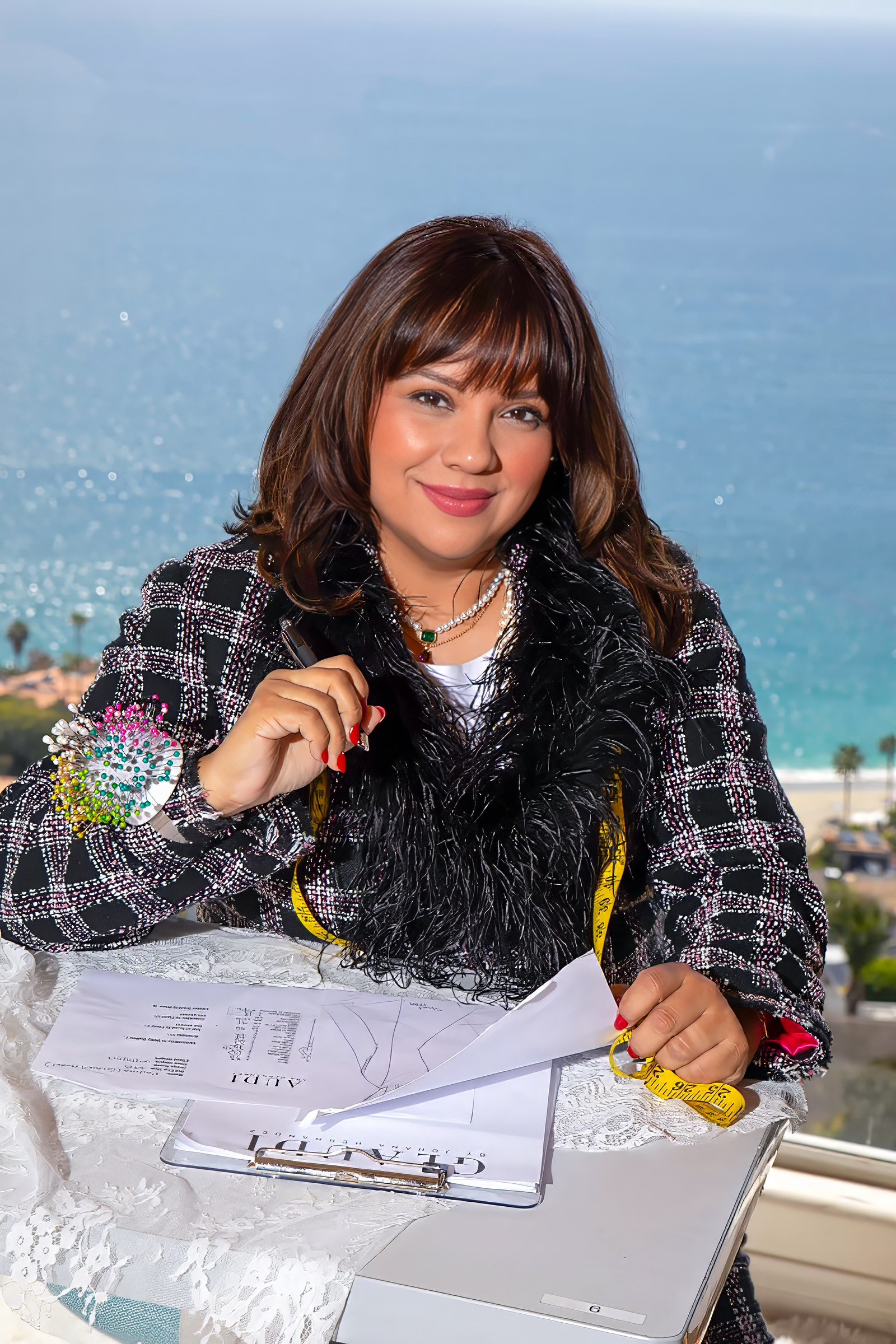
That determination carried her from childhood dreams to the Fashion Institute of Design & Merchandising (FIDM), where she refined the skills that had first been nurtured in factory aisles.
Soon after graduation, she became Head Designer for a sportswear company, earning recognition for innovative denim development before leading design teams for major apparel brands and licensed collections. Despite her success in fashion, Hernández Hutton never imagined someone with her background could become a designer.
“I never thought a girl like me could be a designer because I never saw anyone who looked like me,” she says.
Fashion, she says, should never be about exclusivity. Instead, it should solve problems.
“I think many designers are missing that,” she says. “They’re designing for perfectly proportioned models. But to have a good brand, you need to solve a problem.”
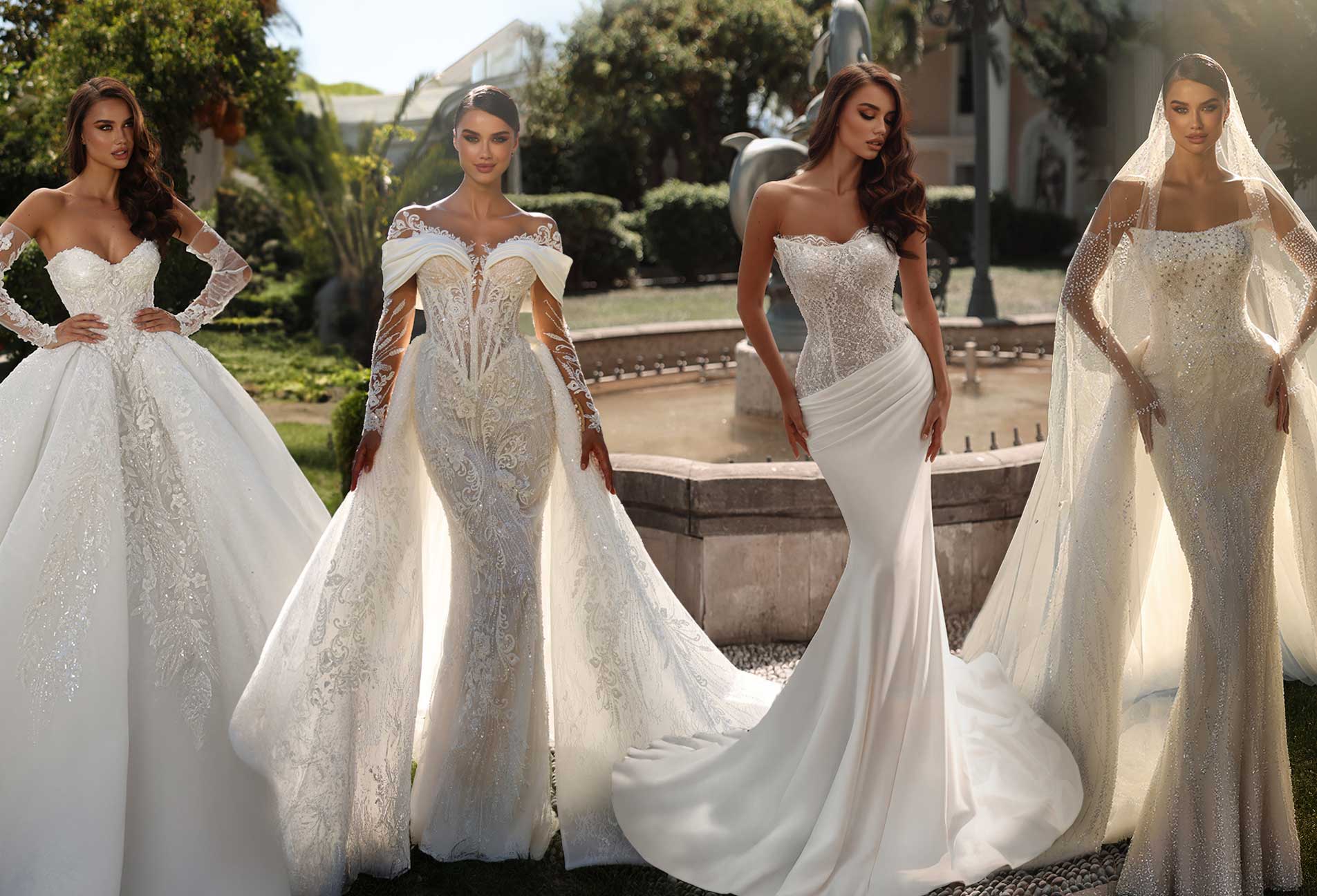
That philosophy has become Glaudi’s defining signature. Rather than asking clients to fit the dress, Hernández Hutton creates dresses that fit the client.
“When I design for a bride, she feels seen,” she says. “She feels I understand her body. I understand her dream.”
Working with pencil and paper instead of artificial intelligence, she sketches every custom design herself. Many brides commit to their gowns before seeing the finished garment.
“They trust me,” she says.
That trust often leads to emotional moments. When trying on the finished look, they often break into tears – “Not because they’re sad,” the designer explains, “but because they never thought they could look and feel beautiful in their own body.”
For her, those tears reaffirm her purpose. As she puts it, “I feel like I’m here to serve.”
Inclusivity remains central to every collection. “It doesn’t matter your shape, size or skin tone,” she says. “I’ll make that dress or suit look perfect on you.”
While Glaudi has become synonymous with luxury bridal and couture, Hernández Hutton says the company began with a very different goal. At 24 years old, she organized a fashion show to raise money for an orphanage in El Salvador that cares for abandoned children with special needs. The event eventually helped fund the construction of a school in rural El Salvador.
Years later, that school continues educating hundreds of children. Looking back, she sees that experience as transformative.
Service has remained woven into Glaudi’s identity ever since. As the label continues to expand internationally, Hernández Hutton’s ambitions extend beyond fashion shows and luxury boutiques.
She dreams of bringing large-scale garment manufacturing back to Los Angeles – “to bring back what I grew up with,” she says.
She is actively searching for a larger production facility where gowns can be manufactured locally while expanding wholesale collections to boutiques across the United States. The designer wants to recreate the vibrant factory environment that first inspired her as a child.
Today, Hernández Hutton is navigating another role—motherhood. Her two-year-old son has shifted her perspective on success. Now, every decision carries deeper meaning. She hopes her journey encourages women to pursue careers while embracing family life without feeling forced to choose between them.
Ask Hernández Hutton what fashion ultimately means, and her answer has little to do with trends. She sees herself as part of some of the most meaningful moments in her clients’ lives.
The Christian faith is important to Hernández Hutton. It manifests itself in the Bible verse Mark 10:9 – “What God has joined together, let no one separate” – which she sews into many of her bridal garments. “I pray for their dresses and their marriage ,” she says, adding, “I’m part of something sacred for them.”
Whether she’s creating a wedding gown, a bespoke suit or an evening dress, she knows those garments become part of memories that last a lifetime.
“I just want to bless them and make them feel beautiful.”