Wendy Waugh Doesn’t Want to Talk About Sustainability
September 28, 2026
Ria Chawla
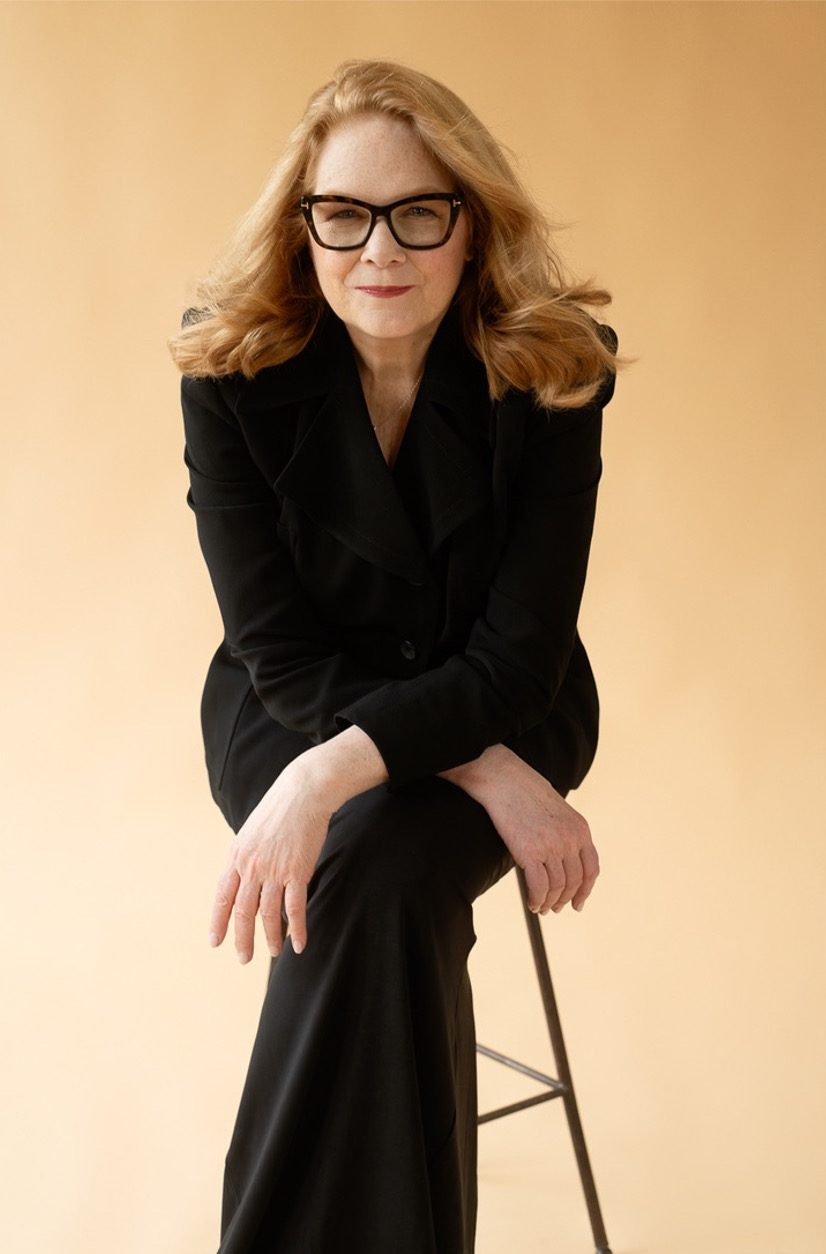
Ask Wendy Waugh where sustainability begins and she won’t say the marketing strategy, the recycled hangtag, or the deadstock capsule collection. She’ll say the fabric – and then she’ll take you further upstream still, to the fiber, the farm, and the people who made it. That instinct to trace everything back to its source has defined her career. She learned the business in private label, where the job was all of it at once – finding the fabric, costing it, working with the factory, making sure all the components were sourced, coordinating shipping and logistics to the right place at the right time, and of course selling the final piece to the customer – and came away seeing a garment as the sum of every hand behind it, never just the final product on the hanger.
She joined a young Theory and stayed more than two decades, moving from merchandising into product development, raw materials, and finally sustainability as the brand scaled around her. This is how she mastered the supply chain – coming to understand that fashion is in many ways a farm-to-table model, and that sustainability is foundational to the business rather than an afterthought. It left her fluent in a way few in the industry are, and it’s why she can translate between rooms that rarely speak the same language: talking fabric with a designer, certifications with a mill, fit with production, and margins with an executive.
Today, she advises brands through her consultancy, Golden Collective, and is building Nua Vie, a repair and upcycling venture that’s put her back at the cutting table. Her case to the industry is bracing in its simplicity: we’ve been thinking about sustainability backwards. The fix sits earlier in the process, and it’s simpler than most brands expect.
You didn’t start your career in sustainability, so how did it find you – what was the moment it became something you had to pay attention to?
About sixteen years in, it became clear that sustainability was something I had to look at, specifically around chemical management, the chemicals being used on the fabrics. The more I learned, the more surprised I was at what I was finding. People used to say to me, “Wendy, you must have always been interested in sustainability because you’re so passionate about it.” And I’d say, “no, actually, I never even knew about it until recently.” It was never on my radar. So I asked myself, why am I interested in this? And I realized it’s about making the world a better place. It’s not just the planet, but it’s about making the world a better place for people. That’s exactly what my purpose and mission is.
The more I realized that, the more it became obvious to me I needed to understand our supply chain. I wanted to learn about the farmers, where the cotton came from, who were the farmers that had the sheep our wool comes from. I had a huge opportunity to visit cotton farms in Tennessee and California, wool growers in Australia and Tasmania, and really understand that there’s this wonderful connection there, that these people have a passion about what they’re doing. It’s typically multi-generational, many generations on the farms creating the fibers. And then I saw it’s not just the people creating the clothes, but everybody along the pipeline. Our customer walks in and picks up a garment – “this is great, I love it, it feels good” – but what it takes to get there and all the people who love what they do in order to make that happen. That’s what I loved about sustainability, really. What can we do to make things better?
When you started advising, what was your approach – how do you get a brand that’s never thought about this to move?
My focus was working with clients who didn’t have sustainability on their radar, or for whom it was just getting there. And what I learned is that it’s not about telling them, “You really should be looking at your supply chain, you should find out where your raw materials come from, let’s shift from non-certified wool to certified wool.” It’s not about that. The approach I took was this: there’s legislation happening in the world, specifically in Europe – the digital product passport. You’re going to be required to understand these things, to know where they come from. I wasn’t someone who thought legislation was the answer, but I’ve come to think it is – it’s how people know they have to do this. So how can I help you implement what you’re going to need to do in a way that just becomes part of what you already do? It’s not hard. It’s not a distraction, it’s not a problem, it’s not a lot of added work.
I didn’t want to work with the large brands, because they already have very established, wonderful sustainability teams. You don’t need me for that. I was trying to bring my expertise to people who don’t have a sustainability department, or don’t have an arm that knows what to do or how to do it. And my intention was really not to disrupt them. I know how difficult their jobs are, how fast it moves, how hard they’re working – the staff is lean, so the last thing they need is more added on. So I’m very sensitive to: what can I do to make it easier, and simplify this?
Now that you’re advising brands across fashion, accessories, and retail, and of every size, where does sustainability most often stall inside a brand?
It’s challenging, and it needs leadership to drive it. If you want to change something out to organic and they say it’s going to cost two euros more – well, if leadership is there, they’re saying, let’s find the solution. It doesn’t have to be more money; there are ways to talk about that. And sometimes it is more money. But otherwise the teams have requirements to meet and margins to hit, so they automatically might say no. So there needs to be this leadership understanding. And then it’s the responsibility of the sustainability team to educate each department and show them what their roles are, and help them solve any roadblocks they find. Finance, procurement, production: these areas aren’t focused on sustainability metrics, but you need to enroll them, so you can do this as a partnership. The two euros, the margins – it can seem like an unsolvable problem. But it’s never unsolvable. We can always find a solution. Let’s do it as a partnership.
Many brands want to retrofit sustainability into systems that weren’t built for it. For an established brand operating with legacy infrastructure, where do they begin?
Start with fabric, and ask the questions. When you develop fabric, you have a list of questions: the name, the content, the width, the weight, the price. And then you just start asking others. Where does the fiber come from? What are the sustainability properties? Do you have certifications? You’re adding five or six more questions, and it becomes part of what you do as a normal course of events. On your PLM system, you could have a few add-ons, some attribute columns that hold those answers. You don’t have to completely change what you’ve got. And the same goes for the mills. The mills, I found, were already doing a lot of this, because Europe was very focused on it, yet if you didn’t ask them, they weren’t necessarily telling you. But they were more than happy to work with you if you asked.
There’s a reason to start with fabric: that’s really your biggest impact, from a chemical perspective and a fiber impact environmentally. And when I say fabric, I’m talking all the way down – to the farms, the seeds, regenerative agriculture, what kind of water is being used, how they’re taking care of the land, the animals. The next thing after fabric would be what kind of energy your factories are using. I’ll never forget one farm I went to see – they were using solar and renewable energy to power their irrigation systems, composting, all kinds of things that were really amazing. So there are ways to look at your whole supply chain and support these shifts and changes, but there really needs to be that intention in the company to help them along the way. Fabric is where it starts – and you have to start thinking about it up front.
You’ve moved into a more creative, hands-on design role with Nua Vie, full circle in a way from where you started. What was the problem or opportunity you saw that made you start it?
We make a lot of clothes. The statistics I keep seeing are that we make a hundred billion items a year, give or take, not including shoes, for a planet that has eight point two billion people. It’s a very complicated conversation, and I don’t really have a broad solution. So I looked at my own impact. I’ve been in the business a long time, and I’ve collected a lot of clothes that I love, that I never wanted to sell or give away, and that I haven’t worn because they don’t fit me anymore, because my body has shifted and changed. So I decided to remake them, to make them fit me. I took two pairs of pants I didn’t like and made them into one pant, and made the other part into a long skirt. I had shirts I wanted cropped, so I cropped them. And I’m finding I wear these pieces more now than I did before. There’s this one jacket, a Gucci blazer from the 1990s, double-breasted, that didn’t fit me that well anymore. I made it single-breasted. It fits me fantastically, I absolutely love it, and I get so many compliments when I wear it.
Then I decided to work with three people as a pilot. With one woman, we remade her mother’s dress – took pieces off it and put them onto a new dress – so she could wear it as the mother of the bride to her daughter’s wedding, and we adjusted her own wedding dress so her daughter can wear it as her second dress. A young man had jeans he loved. They were skinny, and we adjusted them to be more straight; he looks fantastic in them. And they’re all finding they’re wearing these pieces more now than before. Yes, it’s a sustainability issue, but it’s actually more than that. Why do we buy clothes in the first place? It’s not survival. We buy something because we love it; because we feel good when we put it on. When we make clothes, the whole point is to have somebody have an experience. So what about taking what you currently have, reworking it, so you can have that experience again, so you can love it again? It’s all personal, all one-of-a-kind. Nobody else is going to have what you have.
Shop your own closet. What can we be doing to keep these things in circulation? How can we make a difference with what we have, and bring back that wonderful experience we had initially? I really do think this is the next business model. It’s not about not buying new clothes; it’s about making it all make sense.
There’s a lot of emerging talent coming out of design programs today, and they’ll shape where the industry goes next. If you could rewrite the sustainability playbook for the next generation of designers, what’s on page one, and what do they really need to be taught in school to come into the world prepared?
It’s education, but education on what? Not just fostering your creativity and coming up with things people want to buy – that’s one thing design schools are doing a great job of. It’s also understanding the world we live in. Understand what those fabrics are that you’re using, where they came from. That’s why I keep coming back to fiber and fabric and yarn, because that’s really where it all starts, and it’s one of the biggest impacts in that part of the process. So, educate yourself. Material innovation, what’s happening with recycled garments into new fabrics, that’s something I think is critically important. Yes, this is a fabulous fabric, but it’s also made from fossil fuels. What impact does that really have on the world, not just from the oil, but from the microplastics when it’s finally used and washed? Understand what you’re doing.
And ask why. Why do you want to do it? What’s your purpose? What are you bringing to the world? Is it solving a problem, is it helping people, doing something they didn’t already have? As you’re creating your design, think about it holistically. After the line was put together, I’d come in and say, this fabric’s not good, we need a different fiber, and it was too late. If you just look at it at the production stage, you’re already too late.
Press her far enough and she’ll tell you she’d rather not use the word at all. “I don’t even like to think about it as sustainability anymore,” she says. “We’ve set it up with sustainability over here and the rest of the company over there.” What she’s after is a wider definition of profitable: not just money, but experience, the consumer feeling good about themselves, the people in your supply chain. It’s a radical ask in an industry trained to measure success one way, and Waugh has spent long enough across every link of it to know the measurement is too narrow. It’s the same thread that runs from the farm to the fiber to the hands that finish a garment, the one she’s spent a career refusing to cut. “We are here to make things better. Otherwise we wouldn’t be making clothes,” she says. “I’m asking us to expand ourselves, our thinking.”
Wendy Waugh spent nearly 25 years at Theory, rising from VP of Merchandising through senior roles in product development and raw materials to SVP of Sustainability. With more than 30 years in the fashion industry, she is the founder of Golden Collective, a boutique consultancy built on the belief that lasting growth comes from clarity, culture, and purpose, and is also building Nua Vie, a repair and upcycling venture.