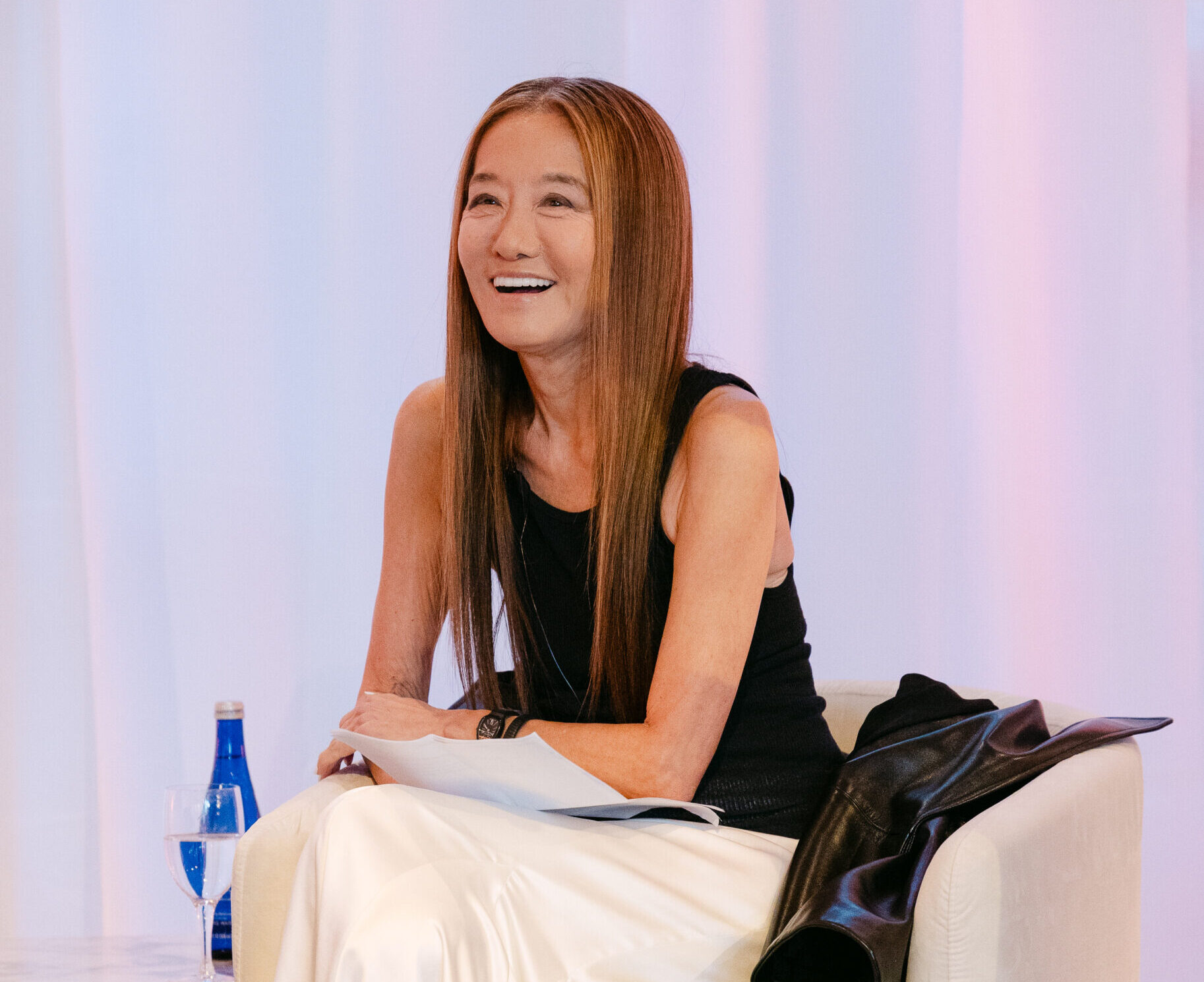
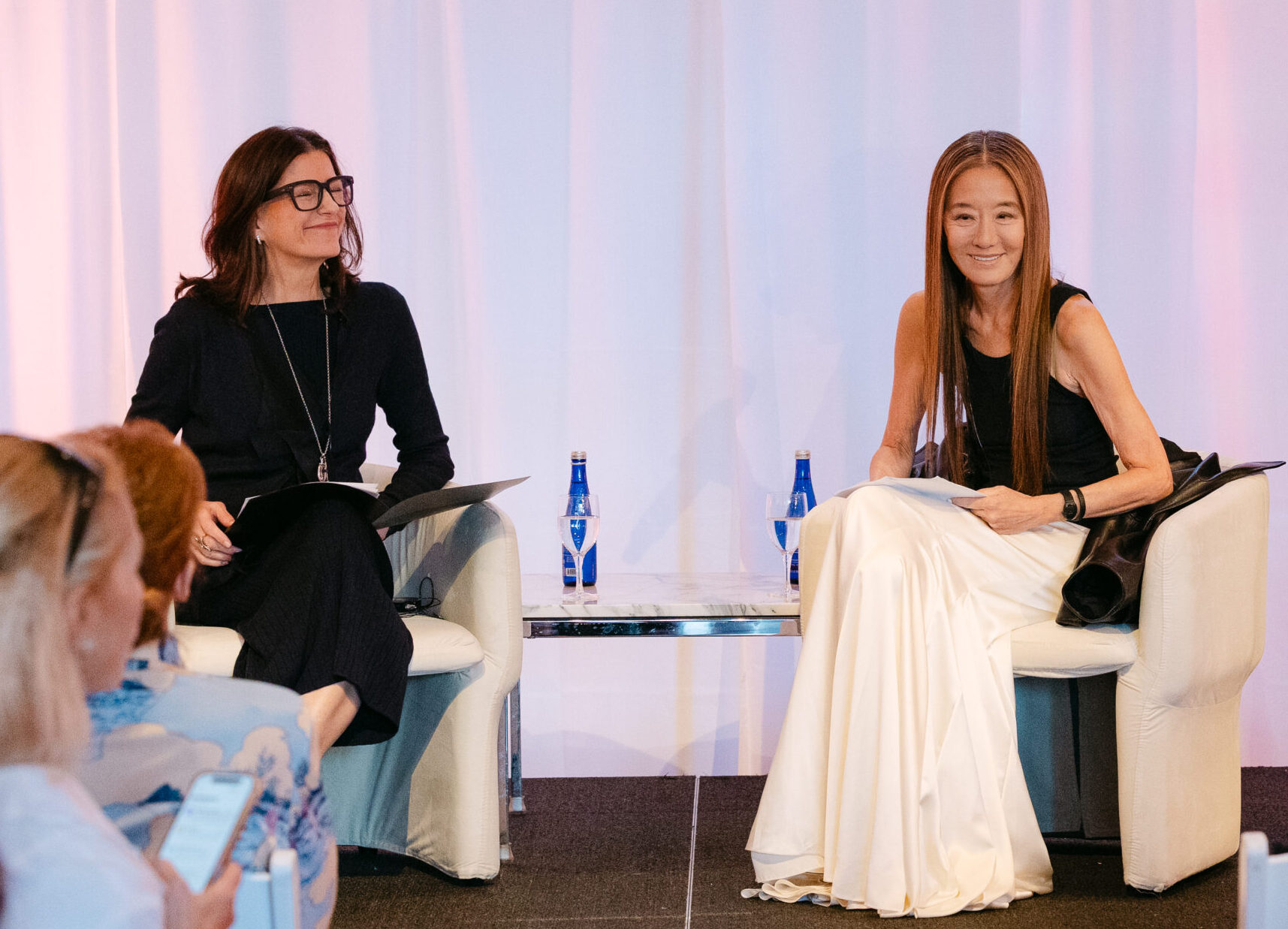
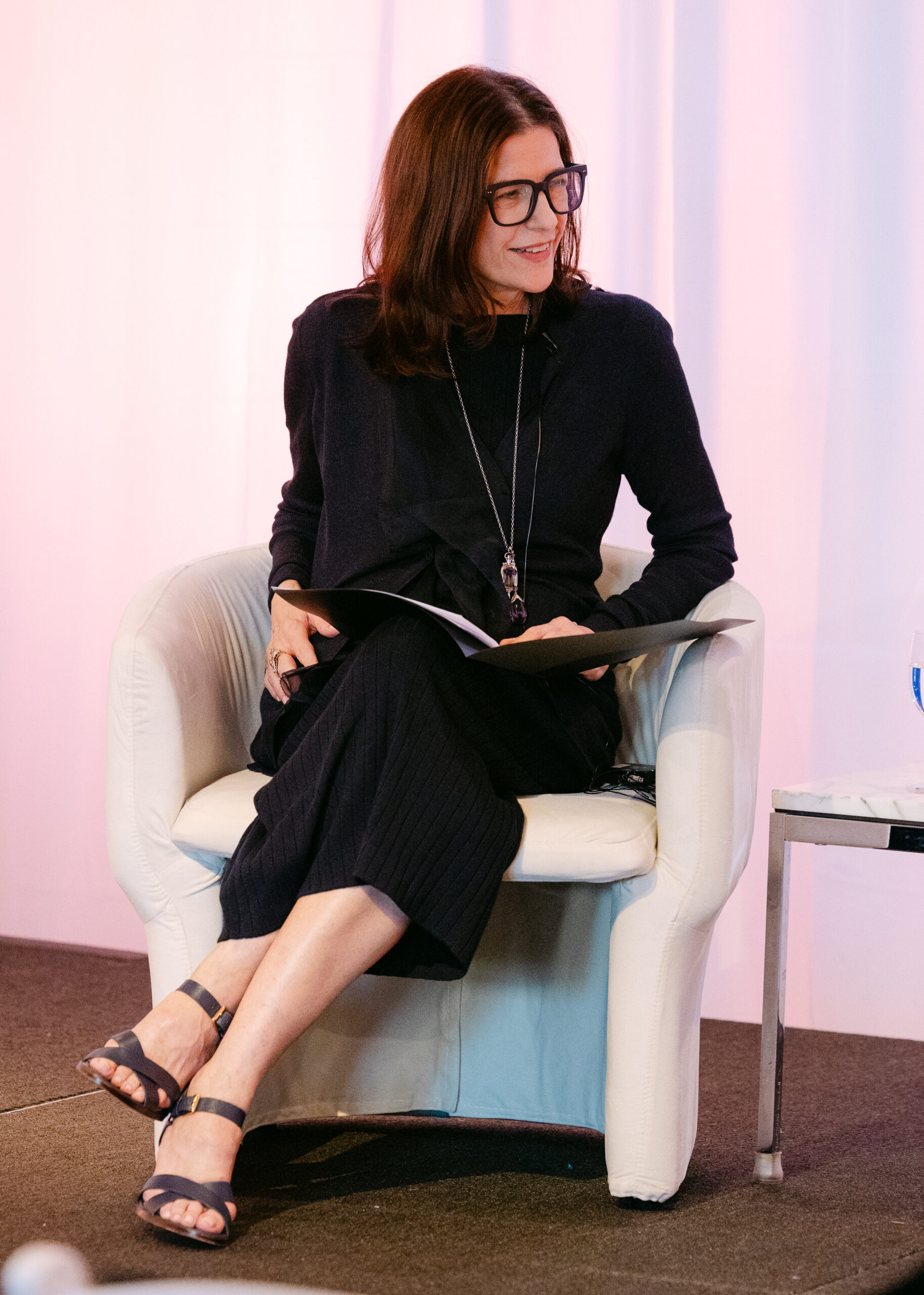
At the CFDA’s Annual Membership Meeting on Tuesday, October 13, Vera Wang sat down with longtime friend and fashion journalist Bridget Foley to discuss her career, the business of fashion, and the challenges facing American designers today. Drawing on over five decades in the industry, Wang shared lessons from her time at Vogue and Ralph Lauren, the growth of her namesake brand, and why creativity and business knowledge are more important than ever.
The Changing Fashion Landscape
Wang described the current fashion landscape as one of the most challenging she has experienced. The rise of mass-market retailers, changes in department stores, and the growing scale of luxury brands have transformed the industry. For independent American designers, competing with the resources of large European luxury groups can be difficult, particularly as fashion shows increasingly prioritize spectacle and social media attention.
Still, Wang sees opportunities for designers willing to explore new approaches to creativity, marketing, and technology.
Exploring New Creative Possibilities
Artificial intelligence was a recurring theme throughout the conversation. Wang shared how her team has incorporated AI into campaign imagery, creating new settings and visual narratives for her collections. A recent eyewear campaign inspired by chess demonstrated the possibilities, while experiments with AI-generated film opened up creative directions she had never previously imagined.
“Designers are storytellers,” Wang said, explaining why she finds the technology particularly exciting. She encouraged designers to educate themselves and experiment with new tools, which can help brands communicate their vision without necessarily having the resources of a larger company.
During the audience Q&A, the conversation turned to whether AI could help smaller brands generate the visibility often associated with celebrity dressing. Wang sees potential in AI-generated imagery and new interpretations of reality, while Foley emphasized the importance of consulting intellectual property attorneys when exploring the technology.
Why Business Knowledge Matters
Beyond creativity, Wang stressed that understanding the business side of fashion is essential to building a successful brand.
“When you really speak to designers who achieve not only recognition but financial success, they are business people,” she said.
Pricing, production, distribution, contracts, and personnel decisions all affect a company’s success. Wang encouraged designers to become more knowledgeable about business and legal matters, particularly when negotiating contracts and managing outside partners. For her, creative vision and commercial understanding go hand in hand.
From Vogue to Building a Brand
Wang’s career was far from linear. Before launching her namesake label, she spent nearly 18 years at Vogue, developing an understanding of fashion imagery and editorial storytelling. She also pursued figure skating for 15 years, an experience she credits with teaching her discipline and dedication.
Eventually, she wanted to move beyond the two-dimensional world of magazine photography and into fashion design. She joined Ralph Lauren as head of women’s licensing, overseeing 38 lines.
During her interview with Lauren, Lauren asked her what she thought was wrong with his clothing. She candidly explained that some garments felt dated because of their weight. Rather than dismissing her criticism, Lauren hired her.
The experience taught Wang how to maintain a consistent aesthetic across product categories while working with licensees, lessons that would later prove essential to building her own business.
Her move into bridal came after she struggled to find a wedding dress that reflected her personal style. Recognizing an opportunity in an underserved category, she launched her own bridal business despite having no previous experience in gown manufacturing. Licensing partnerships, beginning with home goods through Wedgwood and followed by fragrance, eventually helped her expand into new categories while maintaining the Vera Wang identity.
Independence, Ownership, and What Comes Next
After 35 years of independence, Wang sold her business to WHP Global in 2024. She explained that the changing economics of fashion, including the rise of vertically integrated retailers and the investment required to sustain a brand, made operating independently increasingly challenging.
Today, she remains closely involved in the creative direction of her brand, particularly bridal, where she continues to work with fabrics, sample rooms, and garment development. She also emphasized the importance of preserving the craftsmanship behind handmade gowns.
“There can be no clothes if you can’t finance it,” Wang said, underscoring the relationship between creative ambition and financial sustainability.
The conversation also touched on celebrity dressing, which has played an important role in building her brand. Wang recalled the press attention surrounding Sharon Stone wearing one of her designs for Basic Instinct, an early moment that helped establish her relationship with Hollywood. She believes celebrity dressing continues to offer independent designers opportunities to reach new audiences, particularly as younger stars experiment with fashion.
As the conversation concluded, Wang encouraged CFDA members to remain open to change, learn the business, protect their creative identities, and explore new technologies.
Her message was clear: adaptability is essential, but creativity remains at the heart of it all.