Life by the Seine: Derek Lam
April 9, 2026
Roxanne Robinson
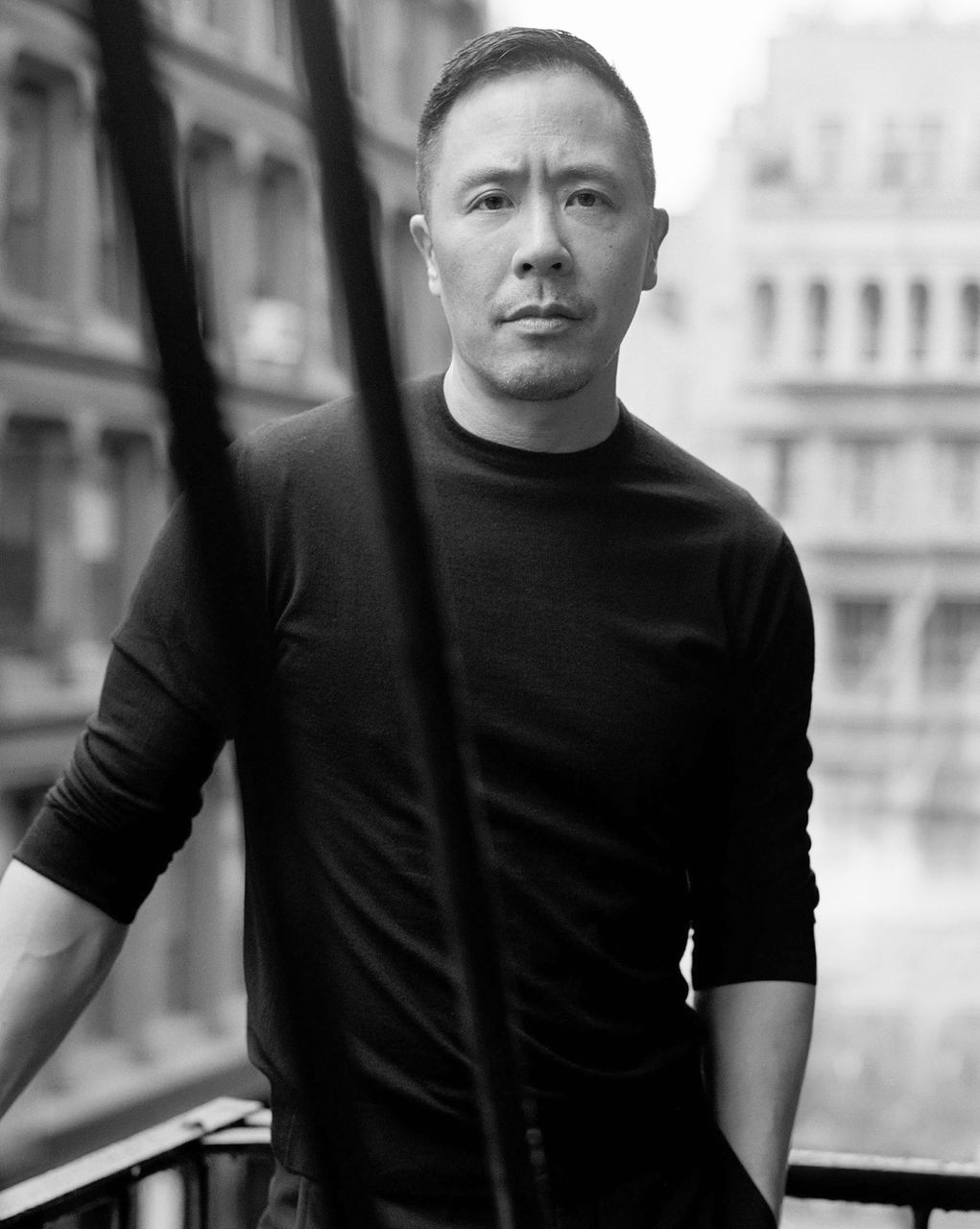
An estimated 14,000 American expats currently live in Paris. Helping to bolster that number are fashion designer Derek Lam and his business and life partner Jan-Hendrik Schlottmann. 2024, the couple moved to the City of Light to be closer to their new clothing venture, Callas Milano, and to fulfill a lifelong dream for Lam and a way for Schlottman to reconnect with his university life there.
Recently, Lam and Schlottman were back at a favorite spot, the Hôtel Amour in Pigalle, to talk about becoming Parisian. They were accompanied by Roscoe, their Irish Terrier who gets to enjoy the privileges of Parisian dog life in local cafés. The hotel is near their new home in the 9th arrondissement, their third—and most satisfying—abode after living in the Marais.
“We were situated right on the main shopping street. On weekends, it was a bit crowded. In Paris, I wanted a quieter situation vis-à-vis New York. I don’t want to live in Disneyland,” Lam said.
“The ninth is more local with interesting people and a great area for food shopping and restaurants,” Schlottman added, noting their Haussmann-style apartment’s air conditioning added to the unit’s appeal.
For green space, Roscoe and the couple can walk to the Tuileries and Palais-Royal within half an hour, though biking is a preferred method of transportation. “If we can, we take the bike everywhere, it’s one of the best things about Paris,” Lam stressed.
It’s a ‘tres vite’ bicycle ride to spots Lam finds especially inspiring: the Bourse de Commerce Pinault collection. “It has great exhibits and is centrally located, so it’s easy to drop in for an hour,” he said.
Another favorite is the Azzedine Alaïa Foundation. “He was a collector, and to see what he created beyond what was in the store blows me away. I always discover more designs there,” Lam said..
Experiencing these places adds to the rich, creative culture Lam finds in Paris, which feels more concentrated than New York City. “The beauty of Parisian life lends itself to creativity because you never feel the grind,” he noted. “New York has great energy, but sometimes, it’s a neurotic or anxious energy, whereas Paris is quieter—there’s no neurosis, just a unique melancholy.”
Paris has beautiful inspiration, a je ne sais quoi for elevating the everyday, and a great international rail system among its positives.
Still, they miss aspects of NYC: friends, the CFDA community, bagels, the recent regional Chinese cuisine boom, and conveniences like Walgreens—where Schlottman says you can get everything.
Every place has its pros and cons. “When I go back to New York, what I welcome most is the energy and optimism for new business,” he said.
Lam pointed out, “New York’s grid street system is efficient for errands and lets you meander freely, while Paris’ winding streets feel more spontaneous but less direct.”
Managing Callas Milano operations and production in Italy is a quick jaunt away. They’ve partnered with Derek Lam’s former producer on a business model emphasizing direct-to-consumer, specialty retailers, and supporting agile market adaptation.
“Our focus is a timeless core wardrobe with seasonal novelties. This approach means customers can depend on consistent, high-quality fit and style each year,” Schlottmann said.
Lam highlighted the advantage of proximity to manufacturing partners. “Having our sample room, seamstress, technical experts, and fabric suppliers nearby streamlines production and maintains quality, crucial for our brand’s value proposition,” he said.
“It hurts American fashion creativity when nothing is local,” Lam added. “Pivoting is harder when everything is done overseas.”
He sees a booming creative ecosystem in Europe and offers clear advice for those considering relocation. “New York is much more open to starting a business. If you’re a young designer moving to Paris, I recommend finding a strong local partner—whether in manufacturing, marketing, or another area that adds value—or exploring opportunities with the many European luxury houses based here. Understanding these differences can make your transition more successful.”