For Runa Ray, sustainability was never an ideology — it was the family business. Growing up in Bangalore, India, in a family that has spent over 50 years making paper from textile waste, sustainability was foundational before it was fashionable. It shaped everything that followed: a design education, training at top fashion houses in Paris, and a career moving between couture, environmental advocacy, and material innovation.
Ray has worked extensively with the United Nations Sustainable Development Goals and Climate Action as a speaker and activist, and founded initiatives including the Global Peace Flag — a movement using fashion waste for peace and sustainability — and the nonprofit Fashioning for Social Environmental Justice. With KELPTEX, her venture transforming seaweed and textile waste into biodegradable materials, she is building on that same conviction — that waste is not a problem to manage, but a resource to reimagine. Here, Runa shares what that looks like in practice, and why designers are essential to making it scale.
Your work sits at the intersection of fashion, environmental action, and systems change. How did your personal and professional journey lead you toward seaweed-based materials, and what problems or opportunities began to emerge as you developed KelpTex?
I have always identified as a fashion environmentalist. My work over the years, in collaboration with institutions such as the United Nations and the World Bank, has been driven by a single question: how do we move the fashion industry toward solutions that are not only sustainable, but regenerative?
At a certain point, I felt a strong need to move beyond advocacy and “walk the talk.” I wanted to build something tangible—something that could actively prevent the very systems that cause water pollution, excessive resource consumption, and environmental degradation in fashion. This led me to the development of KELPTEX.
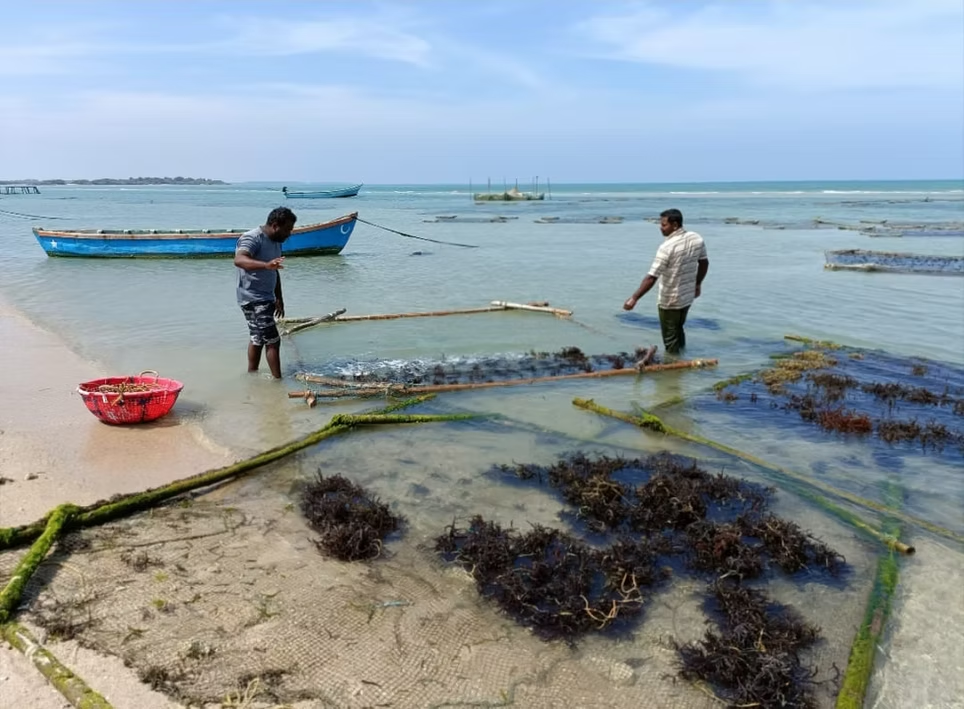
Seaweed became central to this journey not only because it is regenerative, fast-growing, and requires no freshwater or fertilizers, but also because it represents a critical opportunity within the blue economy. Organizations like the World Bank have been actively promoting seaweed aquaculture as a pathway for climate resilience and livelihood generation, with the potential to create millions of jobs by 2050. However, what became immediately clear was that the industry lacked downstream applications at scale.
At the same time, I saw an equally urgent problem in textile waste—an abundant, underutilized resource that continues to pollute ecosystems globally. KELPTEX emerged at the intersection of these two challenges: ocean biomass and textile waste. The intention was never to compete with traditional textiles, but to build a biomaterials platform that enables circularity—transforming waste streams into scalable, regenerative materials for fashion, packaging, and beyond.
For designers who are new to KelpTex, how would you describe it in practice, what it feels like, how it behaves, and where it most naturally fits within a collection or product line?
KELPTEX began as a material innovation platform, but it has evolved into a solution-oriented system—where one core, patented formulation can generate multiple structural materials. In many ways, you can think of it as one factory enabling several industries—from fashion to interiors, furniture, and packaging.
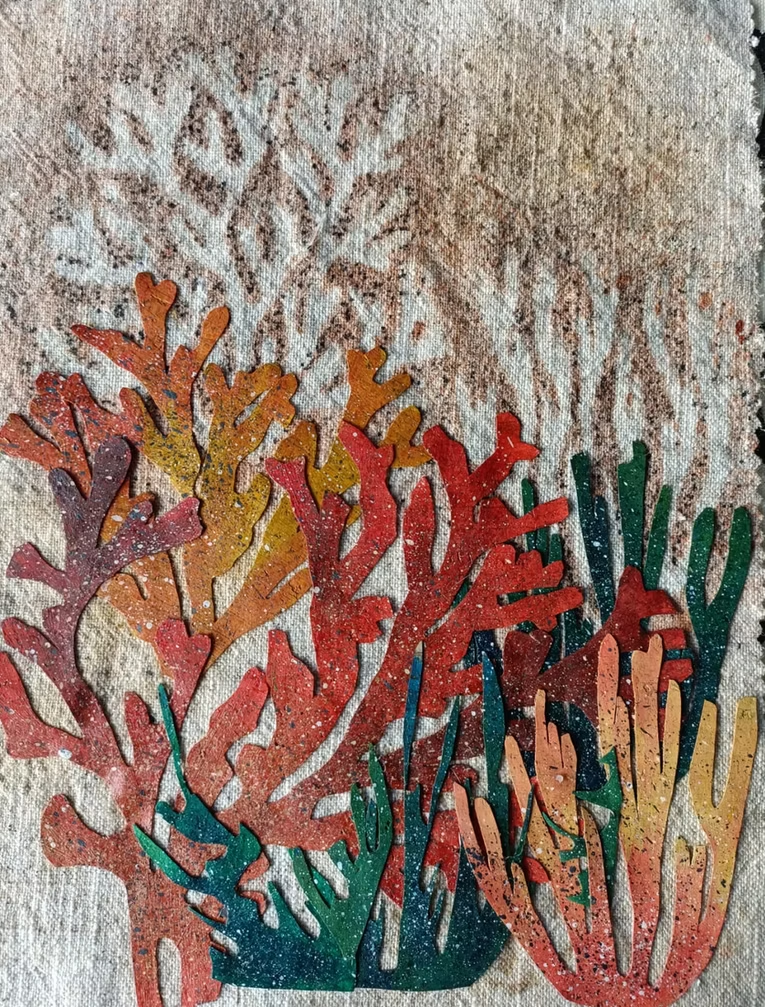
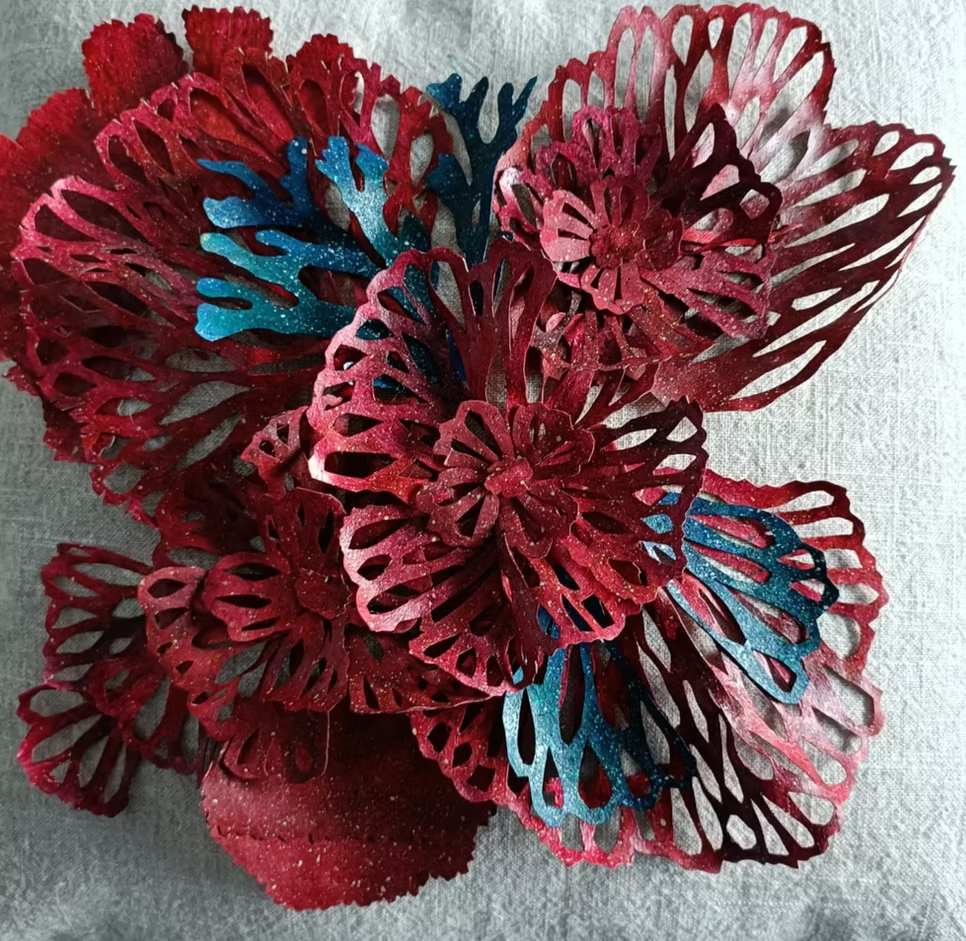
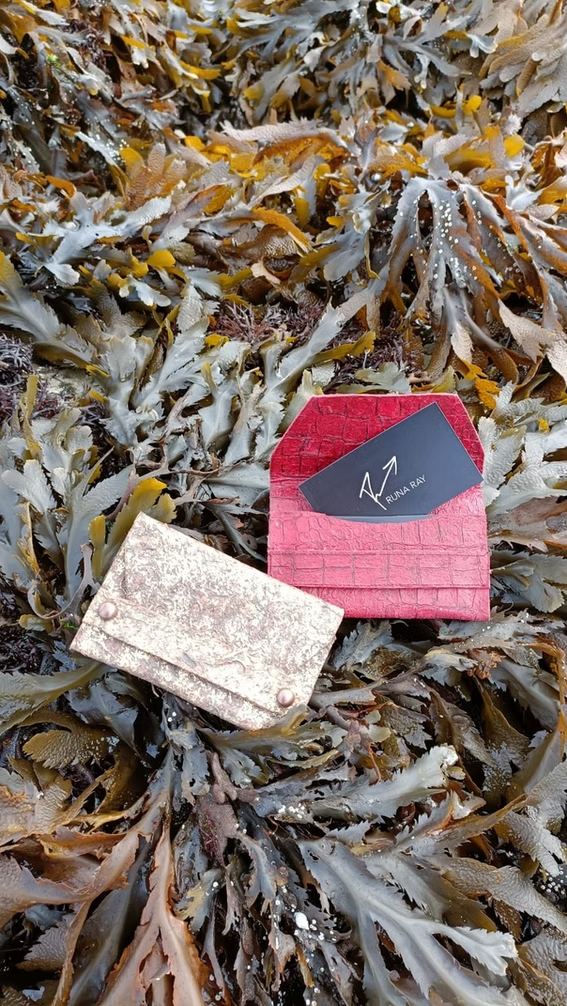
For designers encountering KELPTEX for the first time, the most important thing to understand is how it behaves in practice. The material sits as a structured non-woven—it has body, form, and surface character, but it can also be engineered to vary in thickness, flexibility, and finish depending on the application. It can hold structure for accessories and outerwear, while also being adaptable for more experimental, sculptural pieces.
In a collection, KELPTEX most naturally fits where material storytelling and responsibility intersect—accessories, statement garments, structured silhouettes, and hybrid fashion-object pieces. It allows designers to rethink not just aesthetics, but systems: how materials are sourced, how they perform, and where they go after use.
KelpTex is part of a larger ecosystem, from ocean health to coastal livelihoods. How does that broader context shape the way you think about and develop the material?
My thinking around KELPTEX is deeply shaped by what I witnessed on land before I ever turned to the ocean. While working with cotton farmers in India, I saw firsthand how the push for scale in traditional textiles had long-term consequences—degraded soil, dependence on chemicals, and a system where growing fiber began to compete with growing food. I remember a moment when farmers had to start buying packaged feed for their cattle because the land could no longer sustain what it once did. That stayed with me.
It made me question whether we could create materials that don’t replicate those same extractive patterns.
Seaweed offered a fundamentally different starting point. It grows without freshwater, fertilizers, or land use, and when cultivated responsibly, it can support ocean health rather than deplete it. But what interested me just as much was the human ecosystem around it—the coastal and fishing communities who could benefit from new, stable income streams.
So KELPTEX was developed not just as a material, but as part of a larger system—one that connects ocean regeneration with livelihoods, and production with responsibility. From the beginning, I was intentional about using existing, accessible processes so that the material could be adopted and produced in different geographies without heavy technological barriers.
That broader context continues to guide every decision we make. It’s not just about what the material is, but where it comes from, who it supports, and whether it restores rather than extracts.
As KelpTex begins to scale, how do you navigate the trade‑offs between environmental and social priorities and the realities of cost, scalability, and supply‑chain stability, and how does that shape what sustainability means to you?
At KELPTEX, environmental and social priorities are always the starting point—but scaling forces you to constantly navigate trade-offs. The key for us has been to learn from the mistakes of terrestrial industries, where the pursuit of scale often came at the cost of ecosystems and communities. That is exactly what we are trying not to replicate.
Cost and scalability are real pressures, but they also push innovation. By integrating textile waste—something that is abundantly and continuously generated—we are able to create a hybrid feedstock that supports both material consistency and circularity. In that sense, waste becomes part of the solution, not just a byproduct.
So sustainability, for me, is no longer about perfection. It is about building systems that are regenerative, adaptable, and honest about constraints.
How do you see partnerships shaping the future of materials like KelpTex, and which kinds of collaborators are most essential to moving this kind of innovation forward?
Partnerships are fundamental to how KELPTEX evolves—because this is not a material that can exist in isolation. It sits across ecosystems, industries, and supply chains. On the production side, we are already building partnerships within the textile industry, particularly with mills that generate significant volumes of pre-consumer waste. This allows us to integrate existing waste streams directly into our material development, reinforcing circularity at the source.
Looking ahead, some of the most critical partnerships will be with organizations that bring scientific validation and transparency—particularly around life cycle assessment (LCA). As new materials emerge, credibility becomes essential. Working with institutions that can rigorously measure environmental and social impact not only strengthens the integrity of the material, but also builds the confidence needed for industry adoption and investment.
Ultimately, advancing a material like KELPTEX requires a network—from manufacturers and designers to scientists and policymakers. It’s this intersection of disciplines that will determine how quickly and responsibly we can scale.
What role do you see designers playing in helping new materials move into wider use, and where can they have the greatest impact?
Designers play a critical role in translating new materials into real-world relevance. Innovation doesn’t end with material development—it only begins there. Without designers, biomaterials remain samples; with designers, they become products, narratives, and ultimately, part of culture.
What I find most exciting is how designers—especially emerging ones—approach materials without preconceived limitations. They often see applications beyond what we initially imagine. While KELPTEX may begin in fashion, accessories, or interiors, its potential extends far beyond those categories. Designers are the ones who push those boundaries, identifying new use cases—from everyday objects to highly specialized applications.
Their greatest impact lies in three areas: experimentation, storytelling, and adoption. Through experimentation, they test the limits of the material. Through storytelling, they shift consumer perception—making new materials desirable rather than alternative. And through adoption, they create demand, which is what ultimately allows these materials to scale.
For KELPTEX, this collaboration is essential. As we continue to develop the material, designers help define not just what it is, but what it can become.
Next‑generation fibers are often celebrated for their innovation, but the real challenge is building pathways to sustained growth, with many never moving beyond early‑stage development. How are you thinking about growing KelpTex, and what would you want designers to know, whether around access, minimums, timelines, or collaboration, to help bridge that gap?
One of the biggest challenges with next-generation materials is that many remain in early-stage development for too long. There is often a focus on raising capital and perfecting the material in controlled environments, but without real market exposure, scalability remains theoretical.
At KELPTEX, we have taken a different approach. We believe in putting the material into the market early—even in small, imperfect ways—to test cost, performance, and demand in real time. That feedback is critical. It allows us to iterate quickly, rather than spending years refining something in isolation and then discovering it doesn’t translate commercially. In that sense, I strongly believe in failing fast, learning fast, and building from actual use—not assumptions.
This also directly shapes how we think about capital. Capital should accelerate validated systems, not fund prolonged uncertainty. By grounding our development in real-world applications, we are able to build a clearer pathway to scalability—one that is informed by demand, not just potential.
Ultimately, bridging the gap between innovation and scale requires transparency on both sides. Designers need to understand that emerging materials evolve, and we, as material developers, need to build systems that are responsive, reliable, and ready to grow.