The Hidden Cost of Color
April 6, 2026
Ria Chawla
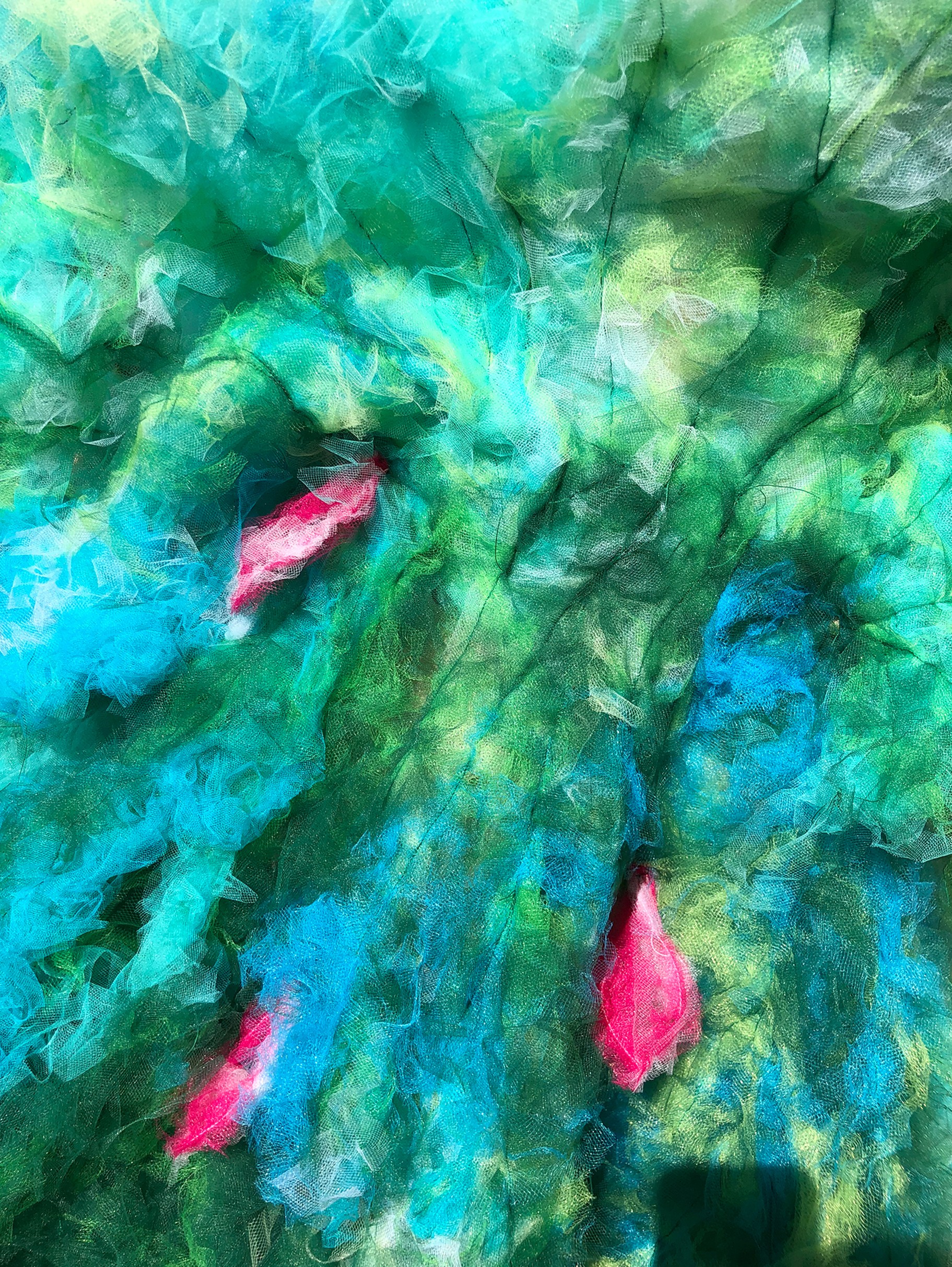
Color is the emotional pulse of fashion. Alongside material, shape, and form, it is central to fashion’s visual language – setting tone, building narrative, and marking shifts from one season to the next. But the way we bring that color to life is far less considered, and it is quietly one of the industry’s most polluting processes.
Textile dyeing and finishing are some of the most resource-intensive stages in fashion production, yet they rarely sit at the center of the conversation. Color isn’t just applied once. Fabric moves through multiple baths, rinses, and treatments to achieve depth and consistency, each step adding water, energy, and chemicals to the process.
Scaled across the industry, the impact adds up quickly. The World Resources Institute estimates that fabric dyeing alone uses around five trillion liters of water each year, much of it concentrated in regions already facing water scarcity. In Bangladesh, a major manufacturing hub, studies have documented the lasting effects of the dyeing process on local water sources and the communities that depend on them.
Beyond preserving and enhancing color, everything from softening a fabric to altering its texture or making it wrinkle-resistant requires additional chemical treatment. While not all these inputs are harmful, many have been linked to serious health risks for humans and aquatic life. What doesn’t bind to the fabric leaves as wastewater, often carrying salts, carcinogenic chemicals, heavy metals, and residual dyes into surrounding water systems – a toxic legacy that disrupts ecosystems far beyond the factory floor.
Rethinking the System
For color to perform at scale, it has been engineered for efficiency – optimized for speed, consistency, and cost. But that efficiency comes with tradeoffs: environmental and human impacts that are increasingly difficult to ignore.
Dye is often framed as a choice between natural and synthetic. In reality, the landscape is far more nuanced.
While dyeing originated from natural sources like plants and minerals, synthetic dyes became dominant as garment production scaled. Natural dyes offer depth, variation, and a sense of connection using color that feels tied to material and place in a way synthetics often flatten. But they lack consistency. Variability between batches, challenges with durability, and inconsistency across categories make them hard to rely on in commercial production. For brands working with multiple styles or reorders, that unpredictability can quickly become a constraint.
Synthetic dyes remain dominant because they meet this industry demand for precision and repeatability. The question is less about replacing them entirely, and more about how they can be used within better systems – through cleaner chemistry, improved wastewater treatment, and stronger oversight.
Innovation in Dyeing
The shift is already underway, as modern technologies rethink the dyeing process – introducing interventions that offer a way to do things differently.
One example is DyeCoo which replaces water with pressurized CO2 to carry dye into fibers. In its supercritical state, CO2 acts as a solvent, allowing dyes to dissolve and penetrate the material with high uptake rates and minimal waste. The result is a process that eliminates wastewater and significantly reduces the need for added process chemicals – addressing two of the most resource-intensive aspects of conventional dyeing.
Bio-based pigment systems are also gaining ground. Colorifix uses engineered microbes to produce color and then applies those pigments through standard dyeing equipment, a model designed to reduce reliance on hazardous inputs and improve process control. This method makes integration into existing infrastructure possible while reducing reliance on petrochemicals, water, and energy.
A third approach pushes the intervention further upstream. We aRe SpinDye integrates pigment directly into recycled polyester before it is spun into yarn, eliminating the need for water-based dyeing altogether. By embedding color at this stage, the process improves consistency and durability, minimizing waste, chemicals, and water usage.
While these solutions are not yet universal, they signal a shift toward systems-thinking – moving away from extractive processes toward more integrated, lower-impact approaches that design with nature in mind.
Where to Begin
While dyeing feels far removed from the design process – especially for brands working with finished fabrics- there are still meaningful decisions designers can shape from the outset.
One immediate lever is tightening the color palette. A more focused palette reduces inputs, limits waste and minimizes repeated sampling. At the same time, it can sharpen a collection’s narrative, creating cohesion across categories and strengthening brand identity. Constraint, here, becomes strategy.
Working within existing frameworks can also make a measurable difference. Certifications and chemical management systems such as OEKO-TEX, bluesign, GOTS, and ZHDC provide a baseline for safer processing and restricted substance use. They do not eliminate impact, but they offer structure, helping brands align creative decisions with more responsible production.
For smaller brands, experimenting with alternative methods doesn’t have to be high risk. New dyeing processes can be tested through limited runs, allowing designers to explore new approaches without committing to large-scale production shifts.
Change rarely happens all at once. With dyeing, it doesn’t have to. The most immediate shifts can be practical and achievable – working with fewer colors, choosing better inputs, learning from suppliers, and treating color as a decision that goes beyond aesthetics.
For designers, this is where control comes back into the process. A tighter palette can reduce waste before production begins. A supplier with transparent chemical management can prevent issues that surface later. Small decisions, made early, compound across the lifecycle of a garment.
The future of color isn’t about removing it, simplifying it, or settling on a singular approach. It’s about building smarter systems that can support it more responsibly – where precision, performance, and impact are no longer at odds.
Where the result is as considered as the process behind it.
Sources
World Resource Institute – The Apparel Industry’s Environmental Impact in 6 Graphics https://www.wri.org/insights/apparel-industrys-environmental-impact-6-graphics
CNN –Asian rivers are turning black. And our colorful closets are to blame https://www.cnn.com/style/article/dyeing-pollution-fashion-intl-hnk-dst-sept
Journal of Environmental Management – Contamination of textile dyes in aquatic environment: Adverse impacts on aquatic ecosystem and human health, and its management using bioremediation https://www.sciencedirect.com/science/article/abs/pii/S0301479724000896
Fashion Revolution – Water First. Fashion Second https://www.fashionrevolution.org/water-first-fashion-second/
UNEP Sustainability and Circularity in the Textile Value Chain https://wedocs.unep.org/rest/api/core/bitstreams/07737510-2d2b-44c2-a458-5ddd4e5fdf0d/content
ECOTEXTILE News – Adidas study confirms benefits of CO2 dyeing https://www.ecotextile.com/2023092847382/news/dyes-chemicals/adidas-study-confirms-benefits-of-co2-dyeing/
Ellen MacArthur Foundation – A safe, biobased dyeing process: Colorifix https://www.ellenmacarthurfoundation.org/circular-examples/a-safe-biobased-dyeing-process-colorifix
Photo credit: Ming Yang