Skip to content
Industry Insights

Local Manufacturing as Leverage: Why Proximity Is New York’s Competitive Advantage

March 26, 2026

Jennifer Jj Lee

New York has always known how to launch a brand. The question now is how to sustain one.

For decades, American fashion led through creative direction and cultural momentum while production scaled globally for efficiency and cost structure. That model built modern fashion. Today, the pressures are different.

Seventy-three percent of fashion executives cite supply chain volatility and margin pressure as top concerns.¹ Apparel continues to carry one of the highest return rates in retail, often exceeding 25 percent, with fit cited as the leading cause.² As consumers buy more selectively and expect greater durability, development discipline has become a competitive advantage.

In an industry optimized for speed, precision is becoming the real differentiator. Domestic production is not nostalgic. It is infrastructure. American manufacturing does not need to compete on volume, but on how intelligently garments are built before they scale.

Development

Development as Infrastructure
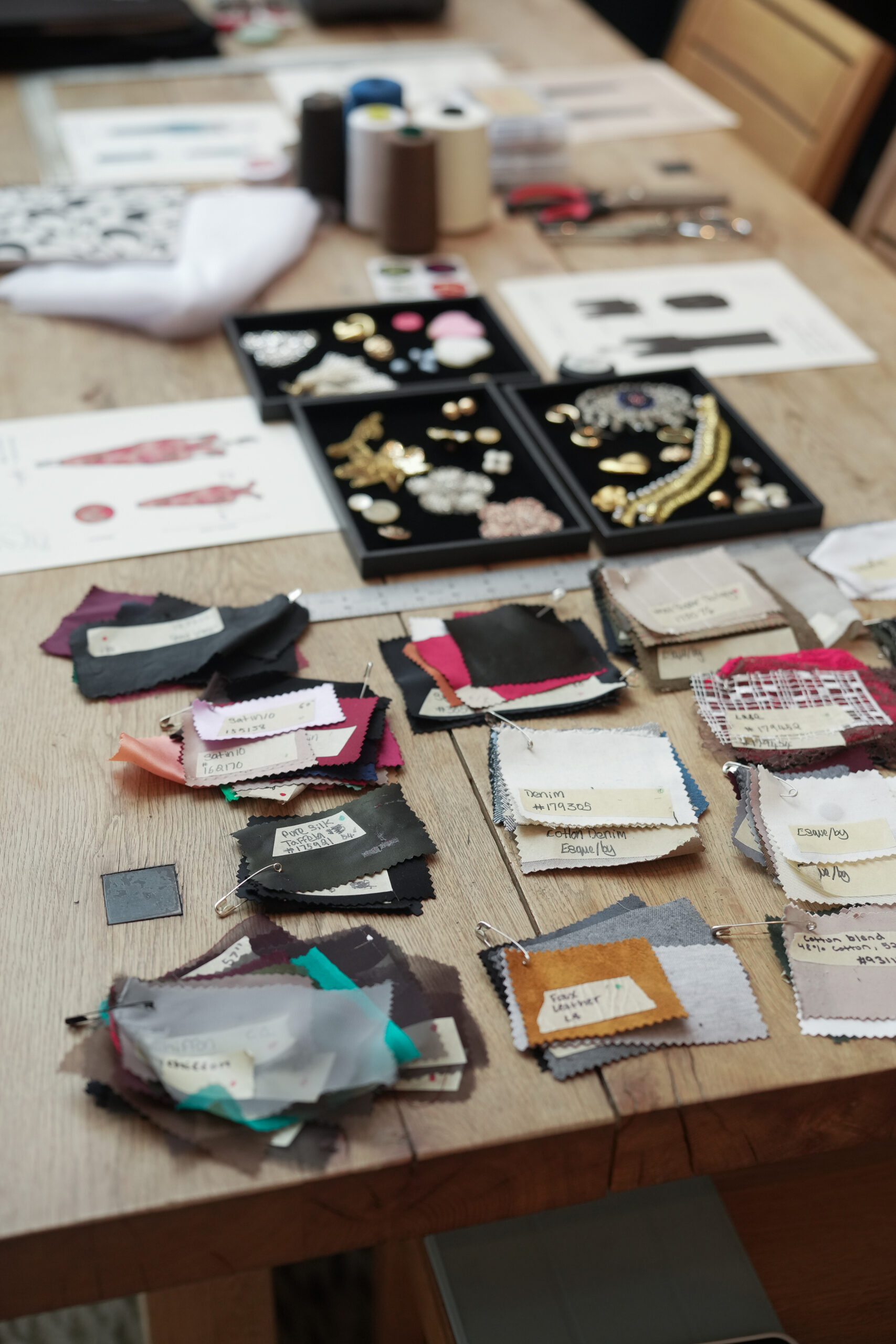
Local production strengthens the earliest stage of brand building: development.

Within New York’s Garment District, designers have access to patternmakers, garment makers, sewists, trim suppliers, and specialty contractors within walking distance. That density compresses time and reduces translation errors between creative intent and execution.

Domestic sampling is more expensive per unit than development in Southeast Asia or other offshore markets. But in early-stage brand building, the cost of delayed corrections, excess sampling rounds, miscommunication, and unsold inventory often exceeds the visible labor cost savings from producing overseas.

In fashion, mistakes scale faster than garments.

Fabric can be tested quickly. Patterns can be revised in real time. Samples can be corrected before production capital is committed. Fit issues are resolved before they multiply across hundreds or thousands of units. Upfront investment in sampling becomes margin protection later.

For emerging designers, this is critical. Optimizing fit and construction early strengthens core blocks, improves grading logic, and directly addresses one of the industry’s most persistent pain points: returns. It also reduces overproduction and waste, as fewer flawed garments enter circulation.

Many New York manufacturers operate below full capacity, allowing them to support sampling, small-batch runs, and early-stage collections without prohibitive minimums. This flexibility enables domestic oversight while building toward scalable production.

The advantage is not scale alone. It is control over how a garment is built before it multiplies.

Where

Where Bespoke Fits

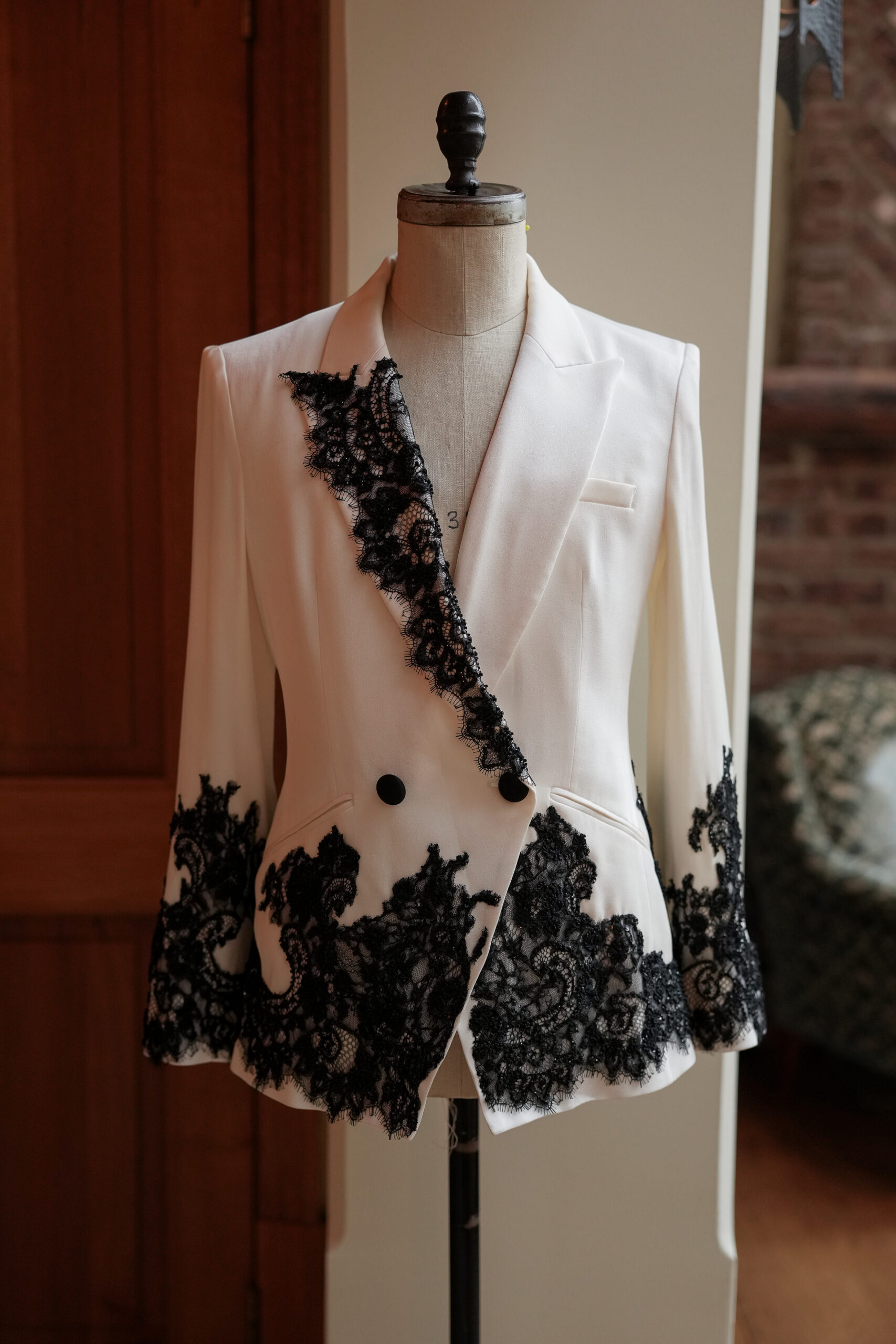
Bespoke is often associated with Savile Row suiting or couture exclusivity. Traditionally, it refers to a garment drafted from scratch for an individual client and shaped through fittings within a designer’s aesthetic codes. Made-to-measure adjusts an existing block. Bespoke begins with a new pattern.

Because bespoke is resolved directly on the body, it generates high-resolution development insight. Balance is corrected in real time. Proportion is refined through dialogue. Construction decisions are tested before they are standardized.

When integrated into a domestic development strategy, bespoke becomes a refinement layer. Insights from bespoke commissions can inform core blocks, grading logic, and technical documentation before ready-to-wear scales.

For established designers, bespoke also represents a strategic revenue layer. Offering locally developed bespoke or made-to-measure experiences deepens client engagement, strengthens retention, and builds direct relationships within New York’s fashion ecosystem.

Luxury houses have long treated couture as research and development. American designers can apply that discipline through proximity-based production while creating differentiated offerings for their clientele.

Who

Who This Serves

For emerging designers launching ready-to-wear collections, proximity provides structure before scale. Pattern blocks can be drafted or refined. Tech packs can be built with direct construction input. Samples can be corrected before manufacturing moves domestic or overseas.

For growth-stage brands, domestic sampling and small-batch production create a controlled environment to test new categories or refine signature silhouettes before committing to larger minimums.

For stylists and creative collaborators, proximity enables co-creation. Garments can be engineered to specific proportions, adapted for clients, or developed from scratch with technical oversight.

New York also offers a rare opportunity to interface directly with American and visiting clients in the country’s largest fashion hub. Designers who incorporate bespoke or made-to-measure into their strategy gain both development insight and a differentiated client experience.

A

A Connected Model

At ESQUE/BY, we operate inside this proximity-based system as a development partner within New York’s Garment District.

Under one roof, our team includes patternmakers, garment makers, sewists, product development managers, and in-house styling support. We work with emerging designers launching first collections, growth-stage brands refining their architecture, and stylists or creatives developing custom garments. Our support ranges from drafting foundational pattern blocks and building production-ready tech packs to overseeing sampling and coordinating small-batch domestic manufacturing.

For designers integrating bespoke into their brand architecture, we fully support bespoke and made-to-measure commissions that generate technical insight before scaling. For founders without formal technical training, we provide structured development guidance, translating creative concepts into production-ready specifications. We also teach patternmaking and garment construction fundamentals, contributing to the preservation of technical craft within New York’s fashion community.

Domestic production, when approached as infrastructure, is not a retreat from globalization. It is a disciplined foundation that strengthens what comes next.

Visibility built American fashion. Infrastructure will sustain it.

About

About the Author

Jennifer JJ Lee is the Founder and CEO of ESQUE/BY, a New York–based bespoke and development studio operating in Soho and the Garment District. With a background in engineering and product development, she works at the intersection of craft, technology, and modern manufacturing, supporting designers, stylists, and creatives through patternmaking, technical development, and proximity-driven production.

Footnotes

1. McKinsey & Company, The State of Fashion 2024, survey of global fashion executives.
2. Narvar, Consumer Returns Report 2023, data on apparel return rates and primary causes.

Subscribe

Keep up-to-date with all the latest news from the Council of Fashion Designers of America.