Forecasting isn’t about products anymore. It’s about people.
A trend, as one panelist put it, is “a general shift in how we think, feel, and behave.” It is less about the color of the season or the resurgence of a silhouette, and more about the underlying combination of behaviors, values, and cultural forces that make those things inevitable.
Executives from WGSN, Pinterest, JOOR, and McKinsey described a fundamental shift away from analyzing what people buy toward understanding the why behind decisions before the purchase is even made. Brands are now contending with an ever-expanding web of signals: social behavior, search intent, cultural sentiment, purchase patterns. Everything is happening and nothing is happening. Without the right framework to make sense of it, data without context is just noise.
Pinterest’s Sara Pollack underscored the platform’s vantage point: with over 600 million monthly users actively planning, searching, and saving, Pinterest captures intent before it becomes action, where desire begins to take shape. That kind of early signal, desire before it is defined, is becoming one of the most valuable things a brand can access.
At the same time, the pace of the industry is accelerating. As JOOR’s Amanda Bacal noted, the wholesale cycle has compressed from around 232 days to 102 in just five years. Forecasting for a future that arrives twice as fast, within a culture that is increasingly fragmented, presents an entirely different challenge.
Psychographics are replacing demographics. Values, emotion, life stage, and identity are doing the work that age and location once did. Existing frameworks are adapting to keep pace. WGSN’s STEPIC, for example, builds on the familiar PEST model by adding an Industrial and Cultural layer, an acknowledgment that context now requires a wider lens. McKinsey, meanwhile, pointed to agentic AI as a tool for processing these signals at scale.
And yet, even with these tools, one reality was consistently acknowledged. Consumers are not behaving as unified groups. Microtrends emerge and disappear almost as quickly as they form, and the signal is harder to isolate.
In that environment, longevity begins to look less like a constraint and more like a strategy. As one speaker noted, the industry often underestimates the power of an evergreen product.
Viable is not the same as valuable.
This line, from Gap’s EVP and CTO Sven Gerjets, cut across nearly every panel. The industry can build virtual try-on, AI-powered recommendations, live commerce, and increasingly sophisticated personalization tools. The harder question is whether any of it meaningfully serves the consumer. As one panelist put it: we can build it. But should we? Does anybody actually want it, and does it solve anything?
The answer, more often than not, comes back to context. Data needs it. Personalization needs it. Taste needs it. AI needs it. Without context, the most sophisticated tools in the world are still just processing noise.
Live shopping emerged as one of the clearest examples of technology earning its place, not because of the format itself, but because it reintroduces a human dimension that e-commerce largely stripped away. People can ask questions in real time, challenge claims, see real reactions. The transaction almost feels secondary. Trust is the product.
And trust, it turned out, was one of the defining themes of the entire day — showing up in live shopping, in resale, in manufacturing, in every conversation about AI. Authenticity is not something you can optimize your way into.
The rules of value are being rewritten.
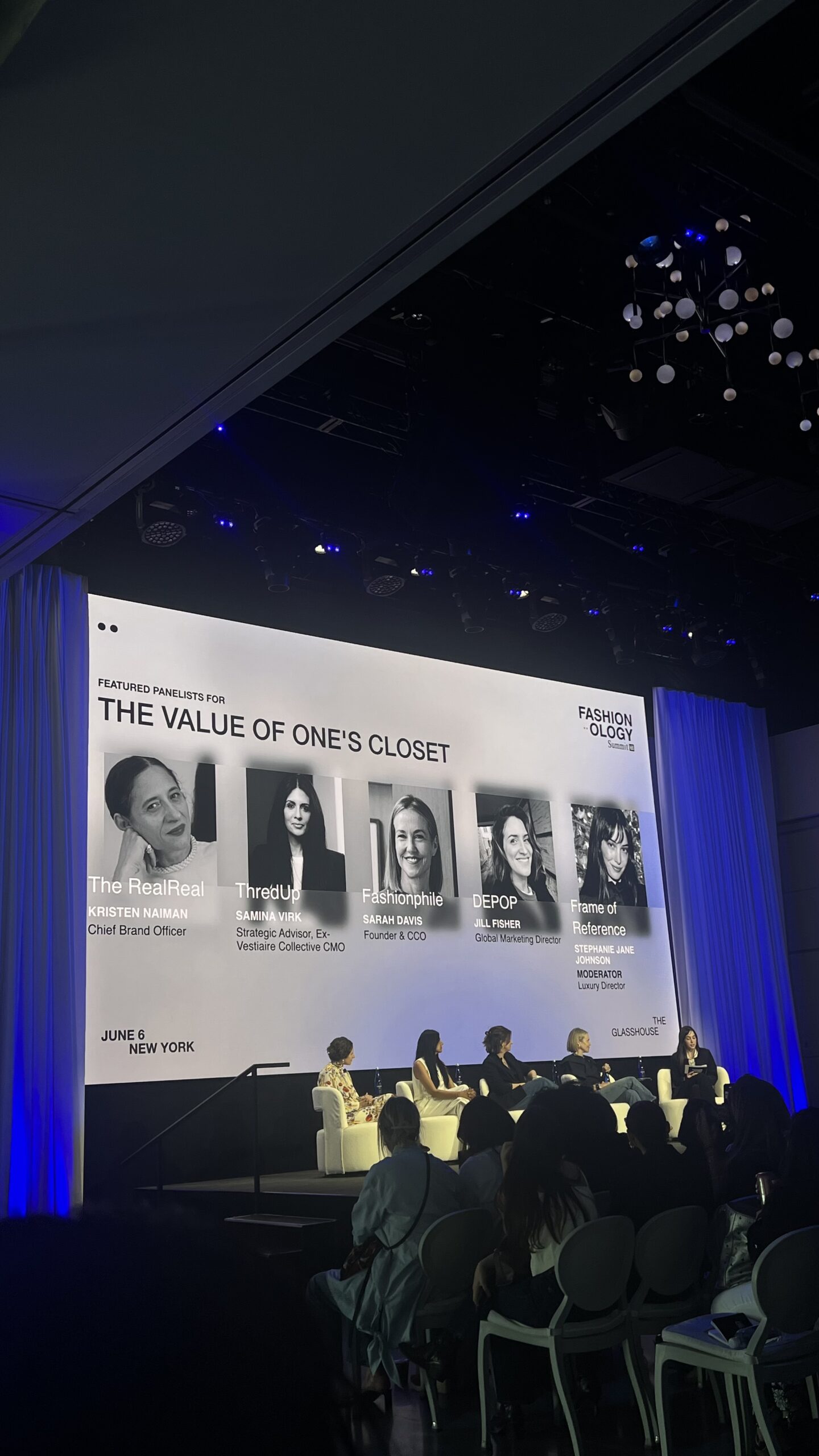
What was once a quiet workaround is now, for many consumers, the first stop. Platforms including ThredUp, The RealReal, Depop, and Fashionphile highlighted how resale is reshaping not only how consumers shop, but how brands are valued. Fashionphile’s Sarah Davis put it best: the most sustainable thing you can do is buy a Chanel bag. The best-made goods don’t reach the landfill.
Across the panel, the secondary market was likened to a stock market, where nostalgia and quality appreciate over time. Your closet, by that logic, is an asset portfolio – what you choose to own, hold, and pass on has measurable value. Resale value is increasingly a real-time measure of brand equity. Design integrity and cultural resonance have a secondary market price
Depop’s Jill Fisher captured the underlying dynamic plainly: “AI has no real taste. Humans do.” In a market driven by personal discovery, curation, and individual perspective, that distinction remains critical.
The back end hasn’t caught up.
If the front end of the industry is becoming more intelligent, the back end is still catching up. The manufacturing panel brought that gap into focus. One speaker likened today’s production model to Blockbuster – built on predicting demand far in advance rather than responding to it in real time. Despite advances in forecasting, supply chains remain largely structured around speculation. The wholesale cycle has already compressed dramatically. The question now, as one speaker put it directly, is whether you are moving faster. And more importantly, whether you are built to?
Companies like Unspun and Kornit are working to close that gap, developing systems that align production more closely with actual demand. The ambition of a minimum order quantity of one – long discussed as a solution to overproduction – is moving closer to reality. As Kornit’s Scott Walton put it, sustainability and profitability cannot be decoupled. The most sustainable thing you can do is not make something that won’t be sold. TômTex’s Ross McBee added one more item to the list: stop calling it vegan leather.
No algorithm required
The influence economy panel added another layer to the trust conversation. Word of mouth has decentralized. Influencers sit at the top of the awareness funnel, but conversion is a different question. Sustaining virality is harder than achieving it. What’s emerging instead is something more durable – peer-to-peer influence, community-driven discovery, and a growing role for long-form creator relationships that build trust over time rather than impressions.
Luxury is finding its footing on TikTok Shop, and AI is entering creator partnerships. But the panels were consistent on where the line sits. The technology can support the relationship. It cannot replace it.
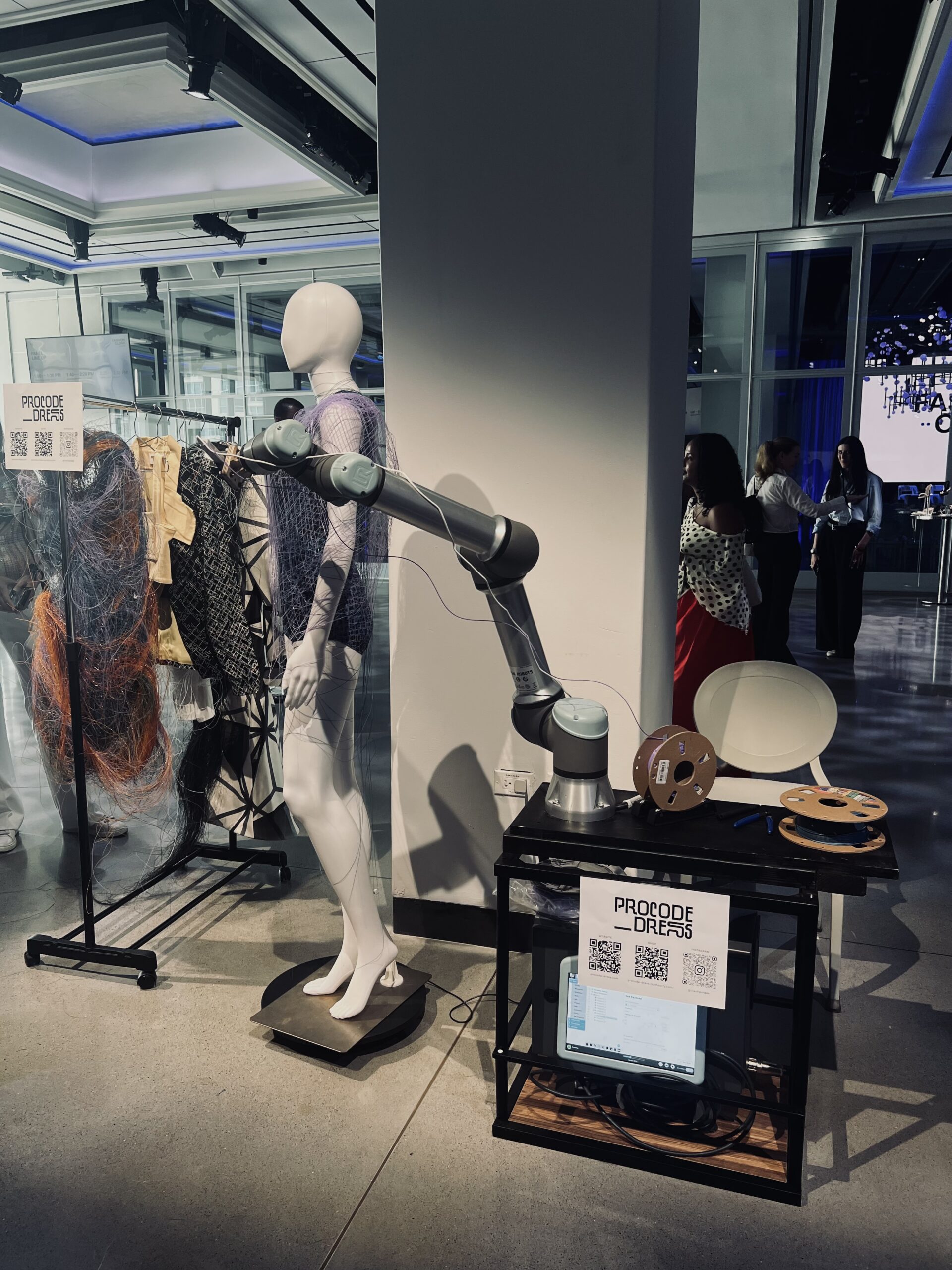
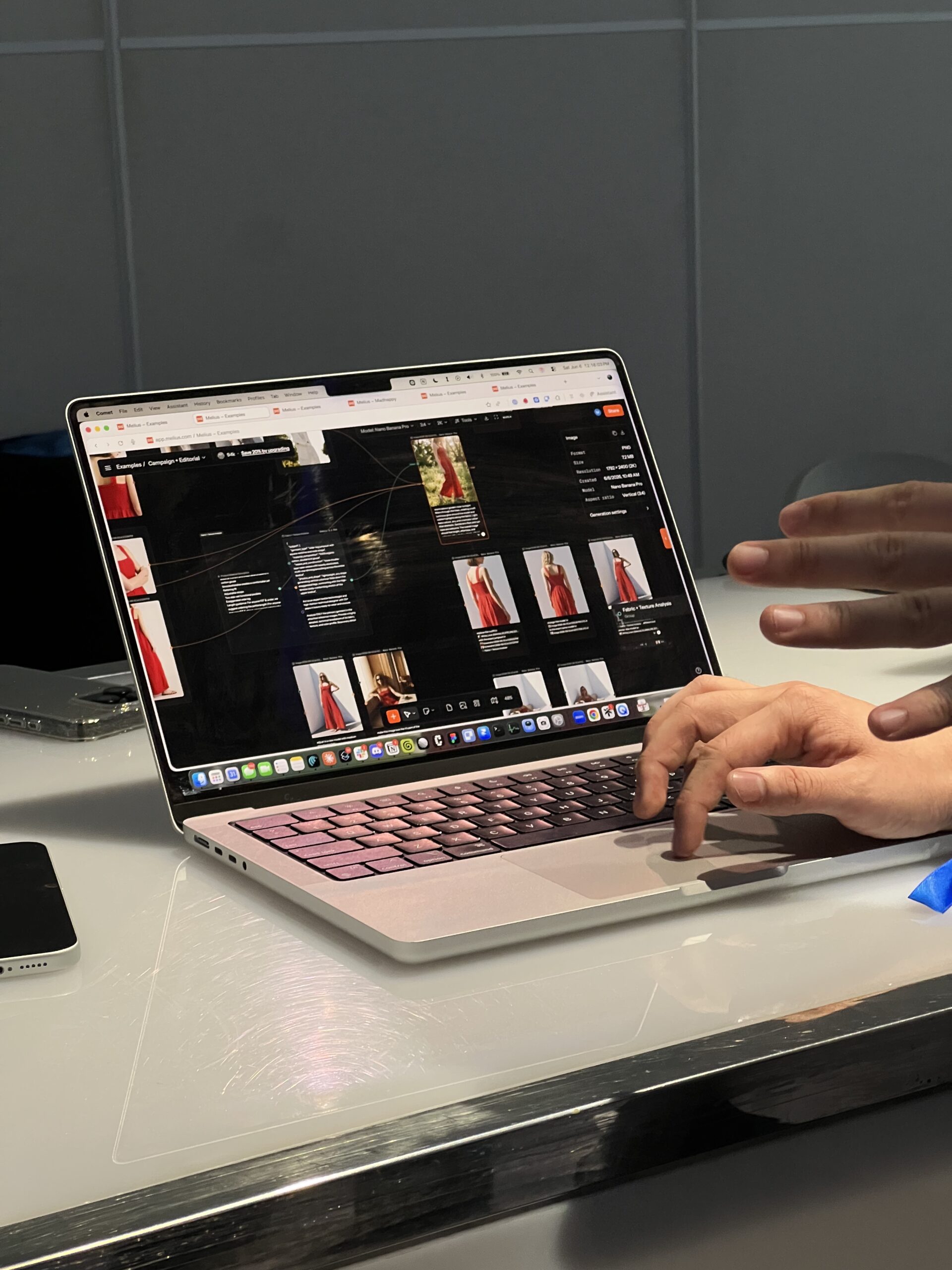
Fashionology may have centered on AI and emerging technology, but its most resonant takeaway was not technical. Across panels, the conversation consistently returned to people – community, identity, taste, trust – the human context that no algorithm can replicate. Technology showed up as a powerful tool, but not a complete answer.
The question is no longer how much the industry can build, but how intentionally it chooses to do so, and whether those choices reflect a genuine understanding of the people it is ultimately designing for.